Interview
November 08, 2025
‘Something is Broken Somewhere’: A Think Tank on Bridging Intergenerational Gaps and Addressing the Youth Crisis in Ethiopia




By
Sisay Sahlu
Good Governance Africa (GGA) is a not-for-profit think tank established in South Africa in 2012 with a goal to improve governance performance across the continent, build up transparency and accountability, strengthen the rule of law, and promote an active citizenry that institutionalizes constraints on executive power.
The organization, which operates through four main regional offices, also conducts research to complement the building of more inclusive political settlements across the continent. Among the issues that researchers and experts at GGA are looking to tackle are environmental degradation, climate change, and mass youth unemployment.
A week ago, the think tank hosted its second annual lecture on the premises of the African Union headquarters in Addis Ababa under the theme ‘Empowering the Youth for a Prosperous Africa.’
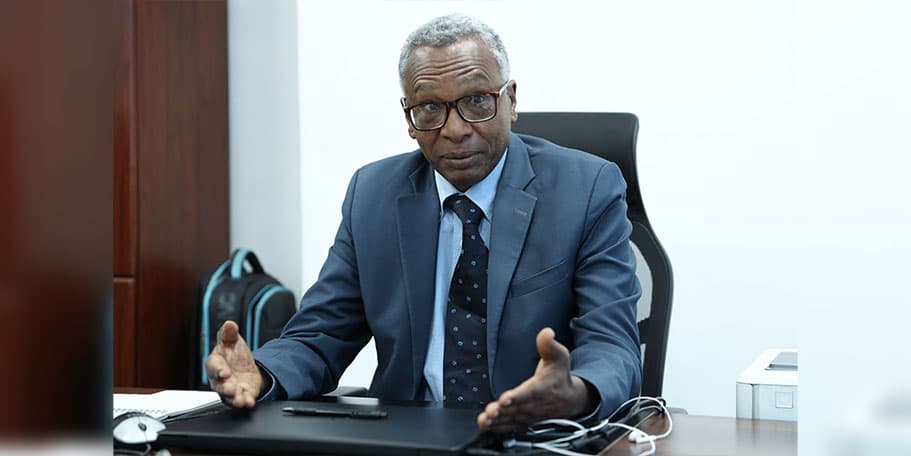
Among those in attendance was Zerihun Mohammed (PhD), executive director of GGA’s Eastern Africa Regional Office.
Zerihun is an experienced researcher who has spent more than three decades working at various academic, governmental, and non-governmental organizations in addition to earning a postgraduate degree in human geography from the University of Cambridge.
The Reporter’s Sisay Sahlu sat down with Zerihun to explore the broader issues of governance and youth across Ethiopia and the continent. EXCERPTS:
The Reporter: What can you tell us about the event that went on inside the AU headquarters in Addis Ababa?
Zerihun Mohammed (PhD): Good Governance Africa has a tradition of organizing an annual event on important continental issues. We started this last year in the South Africa regional office in Johannesburg. It was about fighting corruption.
The second annual lecture was held here in Addis Ababa, Ethiopia. The theme was empowering the youth for a prosperous Africa. The annual lecture is a flagship program in which politicians, policymakers, practitioners, academicians, media, and all stakeholders come together and deliberate on these burning issues.
The main objective is to bring these issues to the forefront among the public and make them a point of discussion, to bring about policy changes. It was on this basis that we were honored to host the lecture here in Addis Ababa in collaboration with the African Union Commission and the Ministry of Women and Social Affairs. We had two keynote speakers followed by a panel discussion.
Do you believe this issue, especially critical in a continent with such a young population, is given the attention it deserves from government officials and political leaders?
The issue of the youth is a very important issue, not only in Ethiopia or in Africa, but globally it’s a major challenge. As we always say, if we are talking about development, it is about youth; if we talk about peace and security, again it’s about the youth. If we talk about any agenda, development agenda, we can’t talk about it without taking the youth into consideration.
As you said, Africa has the biggest youth population. The youth constitutes the majority. The same is true for our country. In Ethiopia, statistics show that about 70 percent of the population are under the age of 35, and more than 30 percent between the ages of 15 and 35.
This is a very good asset for development; capable. But to spur this strong development agent into action, there are policy measures that need to be taken.
Currently, particularly in many African countries, the youth are involved in many issues. They are behind many changes. If you take Ethiopia, for example, it has always been the youth behind the social changes starting in the 1960s, 70s, and 80s.
For example, ‘Land for the Tiller,’ the student movement, and even the movement that brought about the new political order in recent years was led by the youth.
But at the same time, there are contradictory views about the youth.
On the one hand, there is a view of the youth as victims of the current social order in which they are not given quality education or provided job opportunities, not given better social services and so on. There is a tendency to look at the youth as victims.
On the other hand, there are some that see the youth as the opposite, as people who are not doing well, not trying to achieve the best, but trying to look for shortcuts. Both of these have some element of truth. But we need to look at the reality on the ground and form appropriate policies to make the youth more productive and enable them to help themselves as well as contribute to development.
It’s on this basis that we organized [this year’s lecture] with the theme empowering the youth for a prosperous Africa. We believe that all actors, including governments, will take it seriously.
The major objective of the public lecture itself is to bring the topic to the forefront, so that people can consider it in their policies, in their discussions, in their economic planning, and in their political discourse. We believe that governments will take us seriously because it’s not an option.
You can’t ignore the issue of the youth in a country where you have one third of the population between the age bracket of 15 and 35.
There is a need to provide them better education so that they will be productive. There is a need to provide better social services so that they will be healthy, that will reduce the resources we spend on health services, on other infrastructure and so on. We strongly believe that governments will take the issue seriously.
A glaring contradiction in Africa is that most of its people are young, while its political leaders are often much older, in some cases so old that there are serious doubts about their competency. Why do you think this is?
This brings us to the intergenerational dialogue; the relationship between generations. Leadership needs experience, leadership needs education. The youth who need to come to the leadership level at different levels also need quality education and experience.
The issue is again about providing opportunities. The older generation shouldn’t shut the door to the new generation. There has to be discourse between the two generations and a sharing of experience, and paving the way for them to come to the leadership and so on. It is then that we will avoid the discontent of the youth, what we are seeing nowadays in many African countries.
At the same time, the youth needs to be responsible enough to assume leadership. They need to be serious about good governance. They need to have good values. They need to have good sentiment towards development. Then other sections of the society will have confidence in the youth to assume leadership.
However, we need to remember that the youth is a very large group of people grouped together only by age. But in spite of being one unit in terms of age group, there are differences in political outlook, experience, educational background, exposure and so on.
We need to take this into consideration when we talk about the youth. One very simple example is, in Ethiopia, the youth in rural and urban areas.
The youth in urban areas have relatively more exposure and access to various types of infrastructure. Because of our level of development, that access is limited for youth in rural areas despite all the efforts of the past decades.
This means we can’t have similar policies for youth development in rural areas and urban areas. Our policies need to take all these differences into consideration.
Do you think African leaders would be comfortable with making way for the younger generation?
The boundary between the old and the new is very grey. Where the old stops and the new starts is always very grey. But, take a family for example. The father may have a business he has been running for decades and he may have children; sons and daughters. How will he hand that business over to them? The first thing is the issue of confidence. We need to have confidence.
The older generation needs to have confidence in the ability, capability, the intention, and the moral values of the youth to execute that role, to assume power.
That’s the thing. To have this confidence, again, the youth needs to be equipped with proper education and experience. That’s why we always say that education is very important.
We talk about education. But we equally need to talk about the quality of education. That is where we can shape the youth from early childhood to the universities and higher level institutions. Then if you prove to your parents, to your boss, to your elders, definitely you’ll assume power. We see that in many traditional institutions in Ethiopia.
They have their own system for elevating the youth to leadership. The Gada system is a good example. The Lua system in Sidama is another one.
Something is broken somewhere. That’s where we need to mend. In many cases, we are treating the symptoms of the problem rather than the root cause.
In Ethiopia, there is finger-pointing between the younger and older generations. The youth blame their elders for their perceived failures, and the elders blame the youth for what they see as failure to live up to expectations. What is your take on this issue?
It’s quite common. Our fathers used to blame us when we were young, and we are now blaming our children. There is always this kind of push-and-pull in the intergenerational relationship.
It’s an age-old issue. If you take rural areas, for example, regarding land in Ethiopia and other African countries, there is this intergenerational tension sometimes. When a son reaches a certain age, he often needs land. And the family needs his labour. So the son tries to take the land from the family, and the father—the family—wants to keep him for his labor.
There is always tension, but they always have a mechanism for settling these issues. As to the current issues, yes, the blame game starts when there is a problem. So first we need to look at the root causes of the problems. Is it a development issue? Is it unemployment? We should ask ourselves why it’s happening.
What are we providing the youth to blame them? We often say that the current generation is lazy, they don’t do this or they look for shortcuts to be rich. This has some element of truth, but at the same time, what opportunities have we given them? What examples did we set for them? What control mechanisms do we have to put them in line when they are out?
This all needs to be taken into consideration. But what you said is true. And also with development, urbanization or globalization, there is a tendency to erode traditional values. The youth probably consider themselves as something liberated, free, while the older generation will see them as lazy or disrespectful. But the root cause of the problem is the development issue.
Young people played a crucial role in transforming the Ethiopian political system in the 1960s, 70s, and 80s. Can we say the young generation of today is playing the same kind of political role?
Well, every generation needs to be judged within the socio-political setting it lives in. The generations you mentioned, the 1960s, 1970s, played their own roles in transforming the country. We can’t judge that generation within the context of this generation. That generation, for example, played a crucial role in transforming Ethiopia from an archaic feudal society into a modern state
It was the youth that was fighting for the peasants. It was the youth that was fighting for the freedom of the majority of the lower-class people. Did they make mistakes? Maybe, yes. Some of the things were not in their hands, but it was the youth that were on different and opposing sides at the same time during that period.
When the current government ascended to power the Qero, Fano and other youth movements mobilized themselves and many people said ‘oh, the old generation is coming back.’
It is the context that shapes how the youth reacts to certain social, economic and political problems.
The same is happening in many African countries right now; Madagascar, Tanzania, and Kenya in relation with the recent elections.
So it’s very difficult to judge, but there is something broken in the societies that brought this young generation to the streets to fight.
That is where we need to focus. That’s where we need to have dialogue. That’s where we need to have conversation to solve the problems before reaching that violent stage.
More and more youth are choosing to migrate in search of a better life, while others are joining armed groups. What are the reasons behind this? How can we correct it?
Migration is an age-old issue, but it has a new context. That’s why it has become a problem. Why people are migrating is a very simple issue. There must be something that is lacking here, or there must be something attractive out there. Migration needs to be seen not only from local perspectives, but also through the lens of the South-North relationship within the global context; globalization and what’s been happening in the last 20, 30, or 40 years.
There is an accumulation of wealth in the hands of a few. It’s natural if someone thinks, ‘oh, there is a greener pasture somewhere out there, and it will be better for me to go there.’
But on top of that, we have to do our own homework, which we don’t yet do economically, politically, and socially. Those are additional factors that push the youth to look outside. In recent decades in Ethiopia, it is largely economic factors that have been the major driving force behind migration.
How can we bring the younger generation to the center of political dialogue, especially at a time when the youth is alienating itself from the center and opting to be part of the periphery?
It’s difficult to conclude boldly in that way. The youth are still involved in many of the issues. As we said, 30 percent of the country’s population is between the age of 15 and 35.
But if your question is how we can expand political dialogue to include the youth, this is where we probably need to do more work. In fact, this does not apply to the youth only. There needs to be more inclusion, more diverse opinions. We need to listen to one another and further learn how to give and take in political dialogue.
There are some initiatives taken here and there. The national dialogue can be taken as one good initiative. Despite all the limitations, I think it’s a very good step forward. If we want to develop this country, if we want to develop as a continent, we don’t have any option except to sit down around a table and discuss and accommodate our differences and look for a way forward.
International experience tells us civil society organizations like Good Governance Africa play a major role in creating a democratic society. How do you see CSOs in Ethiopia in this regard?
Civil society plays a significant role in shaping the discourse of countries in all parts of the globe. Likewise in Ethiopia, civil societies play a significant role in many areas, both in development as well as in generating and disseminating ideas. But on the other hand, civil society in Ethiopia is in its infant stage. Most civil societies in Ethiopia are not even 50 years old, and many appeared following the political transition of 1991. So we can’t say that we have long experience. We need to learn from others. In spite of that limited lifespan, civil societies still play significant roles.
The discussion, as I mentioned earlier, needs to be based on knowledge, based on facts. That’s how we can have an informed debate. Civil societies, along with academic institutions, can play a significant role.
International aid and financial grants are dwindling globally, and the effects are also being felt in Ethiopia. How do you see the impact on civil society organizations?
Funding for civil society is going down significantly worldwide. This is related to what’s happening in the northern half of the globe.
The traditional donors that used to support civil societies in the global south have their own problems and their own priorities. Because of this, funding for civil societies is falling and many civil societies in the global south are struggling. On top of that, there are changes in political outlook in the global north, like in the US.
USAID is a very good example. We know a lot of programs have been disrupted in many African countries because of the Trump administration’s decision to close down USAID. So this is not just a problem here, but part of the global challenge. We are working in this tight environment.
What is your take on the reforms being undertaken by the Ethiopian government, and the impact of these reforms?
We have to look at the bigger picture. What does Ethiopian society look like? We were a feudal society just half a century ago. We’re new. The democratic process takes time. Culturally, we’re not used to that.
Having said this, the democratic initiatives that started recently are very good.
We are trying to support them, but it’s not something that starts somewhere and finishes in a given timeframe. It’s a process in which you learn, do it again, and learn from what you have done. You may make mistakes in the process. Again, you learn and continue. The function of democratic institutions needs to be seen in the context of the wider political landscapes I mentioned earlier.
Civil society organizations can play specific roles in two major areas. One is filling gaps. These are, as I said, new traditions. An example is the ombudsman, which is a very new institution in our country but has long been established in others. But, even the concept of the ombudsman has to take root deep inside us, and so it takes time. Civil societies can play a significant role in highlighting the experience of other countries, filling in the gaps, and spotlighting things that may not be visible to these institutions as civil societies are working at the grassroots levels. But for all this we need to have a political will.
There is heated debate about Ethiopia’s ethnic federalism and whether it is really a critical factor for the political issues we see today. Do you see it that way?
It is the million dollar question that has been around for at least half a century. And there are some political groups, including TPLF, that believe that the fundamental problem of Ethiopia is the question of nations, nationalities, and people. And there are some other political parties that say, no, that’s not a fundamental problem.
The fundamental problem lies somewhere else; probably because of a lack of dialogue. We took one part and carried it through from the 1990s up until the recent political change. So we know that imposing that on the people in the country brought us to where we are now. The lesson should be not to repeat it.
Whether the question of nation, nationalities and people is a fundamental question or not, needs to be deliberated. That’s why we see this topic coming up as one of the top issues in the national dialogue. If you’re asking me my personal opinion, I may have a different view. Ethnicity is a very good thing. It is something that was there, is still here, and continues to live. But should ethnic identity be the only means of political organization? I doubt that.
We are paying a high price for this. So how can we create a new arrangement without compromising ethnic identity? That needs to be worked out. We need to open our eyes to other options. A complete embracing of that idea or a complete rejection won’t take us anywhere.
Imposition brought us here. Complete rejection will take us to the other end and another round of crisis. This is an area where we need to think seriously and I strongly believe that in the new national dialogue this will be very well deliberated. So, yes, it’s a very serious issue, but we can’t place all the blame on our ethnic-based political system for all the crises.
Comments
No comments yet. Be the first to leave a comment!
Leave a Comment

Society
Old Jaffa, New Tel Aviv
November 22, 2025
Society
“Now, It’s My Land”: Legal Reform Transforms Women’s Ownership in Rural Ethiopia
November 15, 2025

Society
A Gift of Technology — and Hope — for Koye’s Students
November 08, 2025
Society
Data for a Changing Climate: From Soil to Strategy
November 01, 2025

Society
Harnessing Data, Driving Innovation: Securing East Africa’s Water Future
October 25, 2025
Society
Bridging the Health Gap: Ethiopia’s push for Equitable Health
October 18, 2025
Art
Blending traditions: A taste of Italy, Crafted with Ethiopian ingredients
December 06, 2025
Art
Between Tradition and Trend: Ethiopia’s Musical Identity in the Modern Era
November 29, 2025
Art
Ethiopia’s Living Heritage in the Holy Land
November 22, 2025
Art
The Door that Never Closed: Honoring Getnet Enyew
November 15, 2025
Art
Echoes of Memory
November 01, 2025
Interview
December 06, 2025
Surgeon in Exile Offers an Alternate Perspective on Sudan’s Devastating War

Interview
December 06, 2025
Ethiopia-Israel Relations: Diplomacy, Investment, and Strategic Partnerships

Interview
November 29, 2025
A Peek into Ethiopia’s E-mobility Race

Interview
November 22, 2025
Nuclear Scientist Cautions against Ethiopia’s Newfound Atomic Ambitions
Interview
November 15, 2025
Unresolved Obligations, Widening Fractures Weigh Heavily on Tigray’s Opposition Parties

Interview
November 15, 2025
’We Recorded the Destruction Scientifically’
Interview
November 08, 2025
‘Something is Broken Somewhere’: A Think Tank on Bridging Intergenerational Gaps and Addressing the Youth Crisis in Ethiopia

Interview
November 01, 2025
Building a Resilient Health System: Ministry Banks on Alternative Financing Models amid Dwindling Aid