Interview
November 15, 2025
Unresolved Obligations, Widening Fractures Weigh Heavily on Tigray’s Opposition Parties




By
Abraham Tekle
For exactly two years leading up to November 2022, northern Ethiopia experienced intense fighting between federal forces and the Tigray People’s Liberation Front (TPLF) in a war that produced large-scale civilian casualties, displacement and reports of widespread abuses.
The Pretoria Agreement, signed in November 2022, formally ended the hostilities and set out steps towards a return to peace, including disarmament, the return of refugees and internally displaced persons (IDPs), withdrawal of non-ENDF forces, and a program for demobilization, disarmament and reintegration (DDR).
Implementation, however, has been uneven: key provisions on DDR, transitional justice, and IDPs remain largely unfulfilled.
International monitors and rights groups continue to document the presence of non-ENDF and Eritrean forces in Tigray and to link that presence to delays in returns and security guarantees. In addition, since the agreement, internal political fractures within Tigray’s political leadership and recent clashes in border areas—notably reports of skirmishes in the neighboring Afar region, have raised fears of a return to war.
Local reports and analysts point to new military mobilizations, allegations of drone strikes, and rising hostile rhetoric from military and political actors. Reportedly, these combined failures of implementation and allegations of continuing external interference have raised tensions and left the Pretoria settlement vulnerable to collapse.
Amid these developments, opposition political figures in Tigray have renewed calls for all signatories to the Pretoria Agreement to fulfill their obligations and see out their responsibilities in making certain that the region does not slip back into a state of conflict.
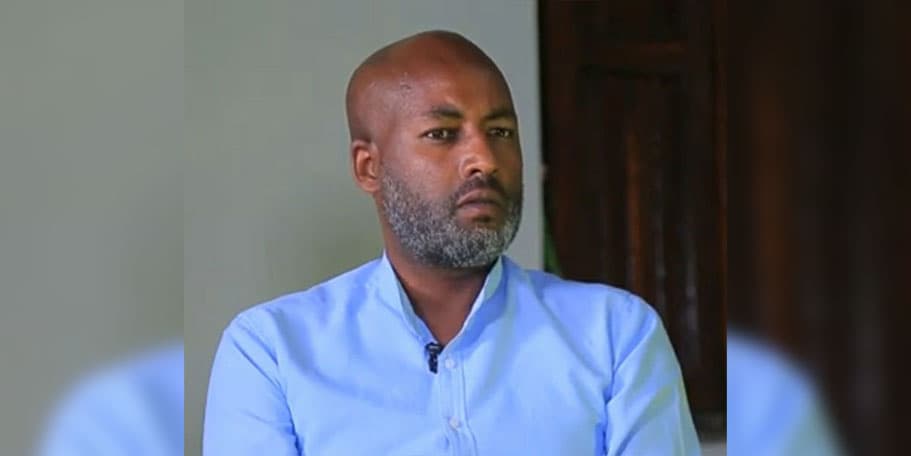
Among them is Alula Hailu, who has served as chair of the Salsay Weyane Tigray (SaWeT) party since December 2023. Alula ventured into politics following a career in software engineering and in civil society.
He sees the recent developments in Tigray as detrimental to the region’s efforts to recover from the war, noting that the disruptions affect not only the wider community but also the political leadership, referring to the former and the current governing authority.
In a wide-ranging conversation with The Reporter’s Abraham Tekle, Alula discussed several key issues, including the Pretoria Agreement and its implementation, the recent clash involving the Afar region and questions of accountability, the unconstitutional relationship between the TPLF and the Eritrean government, and other critical matters. EXCERPTS:
The Reporter: Three years have passed since the signing of the Pretoria Agreement and several issues remain unresolved, including those related to the return of IDPs and DDR. However, there are now signs from both sides (the federal government and the TPLF) suggesting a possible return to conflict. As part of your party’s observations and if accountability is to be assigned, to whom should it first be directed?
Alula Hailu: With regard to the Pretoria Peace Agreement, assigning responsibility to only one party is not accurate, as both signatories have failed to fully implement the duties assigned to them under the accord. It is therefore necessary to assess their responsibilities separately and examine which side holds greater authority and obligations in delivering the expected outcomes. In this context, the federal government carries the primary responsibility for normalizing conditions in Tigray, restoring basic services, and undertaking related measures that serve as mechanisms for building confidence and trust. These are not tasks the federal government should claim credit for, as they are obligations clearly outlined in the agreement.
Under the agreement, the federal government is required to restore constitutional order in Tigray. This includes reestablishing basic services, ensuring the withdrawal of non-ENDF forces from the region, and facilitating the return of internally displaced persons in accordance with constitutional provisions. All these obligations derive from the same constitutional framework. In this regard, the federal government has not fully carried out its responsibilities. Assigning these tasks to other entities contradicts the agreement, which designates the federal government as the sole body responsible for their implementation based on the constitutional framework but has failed so far.
The return of displaced people cannot occur while other forces remain in areas constitutionally designated as part of Tigray. Many territorial claims raised over Tigray come from the constitutional order of the country, a process that has no clear endpoint. If pre-1995 boundaries were to be applied, there would be no regional states such as Oromia, Amhara, or Afar. Under such an approach, even Eritrea would not exist as a separate country. These considerations illustrate areas where the federal government has fallen short in meeting its obligations.
Similarly, the TPLF has not met its responsibilities. It is expected to monitor and ensure the federal government’s implementation of its duties, while the interim administration is also required to uphold institutional integrity. Gaps are visible within the Tigray forces, which were expected to participate in the DDR process but have instead continued with training activities and military parades, contributing to a war-like atmosphere. This undermines the agreement, as the same as the unconstitutional engagement with foreign actors.
However, the failure to establish an all-inclusive regional government in the region is a responsibility shared equally by both the federal government and the TPLF.
In a recent press statement, your party said that the federal government is preparing to open another round of war with Tigray and propagating the war agenda. On what basis did you reach this conclusion?
We do not raise concerns for the sake of formality. Regarding the TPLF and its displays of military parades and the statements made by its military personnel, we have repeatedly voiced our concerns to them. At the same time, it has been heard that the federal government has delivered its own war-related messages before Parliament, stating that any future conflict would be more destructive than the previous one, citing examples from Gaza and other places. This rhetoric, which suggests even greater devastation for the people of Tigray, amounts to direct threats that create fear among the population.
The federal government is not working to restore normalcy in the region through peaceful means, but instead appears to rely on coercive rhetoric against the public. Similarly, TPLF leaders cannot claim to seek peace while simultaneously conducting military training.
Reports indicate that Eritrean forces remain present and active in Tigray, while some of the region’s political and military leaders are said to maintain a relationship with Asmara. On the other hand, some prominent individuals from the TPLF faction are reportedly working with the federal government. Do these relationships truly exist? How might they affect the region’s political landscape and stability?
As a political party, we cannot provide definitive facts about who is working with whom, as we are not the source of such information. What we can do is analyze the publicly available narratives. For instance, there are reports of cross-border interactions with Eritrea conducted under the banner of ‘people-to-people relations,’ involving influential figures and propagandists from both sides. These activities occur without the knowledge of the federal government and are therefore in violation of both the Pretoria Peace Agreement and the country’s constitution. The federal government has also expressed concern about these developments.
As a party, we consider these actions unlawful and view them as long-standing behaviors embedded within both the TPLF and Shabia [the Eritrean People’s Liberation Front]. This pattern reflects a political system they have built over many years. Consistent with this behavior, the TPLF seeks to control cross-border communication and even relations among neighboring communities, reflecting its authoritarian nature. Shabia exhibits similar tendencies but in an even more controlling form. However, their political disputes and conflicts have contributed to separating people who share common ties.
It is up to the people on both sides to resist such controlling forces and reclaim their freedom, as recent developments appear to be taking place with the approval of both political groups. These unlawful interactions pose significant risks to the region, particularly to Tigray and its population, as Shabia seeks to use Tigray as a battleground rather than fostering genuine, people-centered engagement. It is important to recall that Shabia committed deliberate and strategic acts of genocide against the people of Tigray. For these reasons, we reject this unlawful cross-border engagement, which has been enabled by both the TPLF and Shabia.
Regarding relations involving other TPLF faction leaders and the federal government, we have no objection as long as those engagements are conducted in the name of the TPLF itself. However, we oppose any unconstitutional relationship carried out in the name of Tigray. If so, the purpose and nature of such engagements must be transparent and disclosed to the public.
Recent reports indicate that an entity referred to as the Tigray Peace Force (TPF) is present in Afar, where clashes allegedly took place last week. Some claim TPF is supported by the federal government, while others say the group is linked to the newly established Simret Party. How does your party view this issue?
As mentioned earlier, we do not have full clarity regarding each incident, and even if we had such information, we would not present it as verified fact. However, our party’s position on this matter is clear. Whether it is the TDF or the TPF, both forces defended Tigray and its people during the genocidal war. Their separation resulted from political maneuvering within the TPLF, in which political leaders and military officials split the force into two—one side attempting to seize power, while the other rejected the move and aligned itself with the group now known as the TPF.
When these two forces fight one another, it ultimately weakens Tigray and leads to the loss of its youth. This is why we oppose such actions and call on both groups to address their disagreements through dialogue and work toward a solution that benefits the region. We have consistently advocated for a lasting settlement between them and will continue to do so. We also believe they should refrain from engaging in conflict in Tigray, Afar, or anywhere else for that matter. Again, we urge them to resolve their differences peacefully and without the involvement of external actors.
If the federal government is involved behind the scenes, then national resources are being misused, and any such support must stop, as it only fuels further conflict and harms both the country and the wider region. The same principle applies to the Simret party. If the party possesses an armed force, then the National Election Board of Ethiopia (NEBE) should revoke its registration immediately. However, I consider this scenario unlikely, as I believe TPLF has promoted this narrative to use Simret as a scapegoat for its own political agenda.
Some political figures and activists from the region claim the federal government cannot intervene if fighting were to break out between Tigray and Afar as that would be construed as a violation of the Pretoria Agreement. How much do you agree with this view? In cases of regional conflict, who should be held accountable?
I think the situation in Tigray should not be treated as normal, and this must be taken into account when analyzing the devastating war situations in the region. The other thing is that its military power is not comparable to other regions, as its forces are battle-tested and the DDR process has yet to be implemented. This is an undeniable fact. Achieving balance among regional states is therefore difficult without the full implementation of the Pretoria Agreement. At the same time, the federal government has deployed its own forces to the region and transferred the administration of 40 percent of Tigray’s territory to other regional states. Under these circumstances, it is difficult to view the federal government as maintaining a neutral position in conflicts between regional states.
For example, in the territorial issue between Tigray and Amhara, it is not Amhara forces occupying constitutionally recognized Tigrayan territory, but federal forces. If Tigray were to attempt to reclaim these areas by force, it would be the federal government that responds militarily to secure them.
For these reasons, I do not subscribe to the narrative that the federal government acts as a neutral actor in conflicts involving Tigray. Should clashes arise between Tigray and another regional state, the federal government is likely to align against Tigray rather than deescalate tensions. This makes it difficult to request the federal government to reduce the risk of conflict. Nevertheless, under the constitution, the federal government is obligated to remain neutral and address disputes among regional states impartially.
In a recent address, Prime Minister Abiy Ahmed (PhD) implied that the Pretoria Agreement was a deal made between individuals. How does your party interpret this statement? What effect could it have on the peace process?
I believe the federal government has been given an unchecked opportunity to do whatever it wants due to the weaknesses of Tigray’s leaders, who have created a favorable environment for the government to operate. However, linking the peace agreement to specific individuals who participated in the signing process does not align with international practice. It is also relevant to note the uncertainty regarding which faction of the TPLF represented the organization during the signing, as the party later split into two or three groups, with one faction losing its legal status.
This raises questions about who can legitimately be recognized as the TPLF. Nevertheless, this internal division does not give any other party the authority to select or replace those who signed the agreement. For this reason, I view the Prime Minister’s remarks as a political maneuver, as he does not have the legitimacy to determine which individuals represent the signatories to the peace accord.
Your party has repeatedly expressed its concerns about the current situation in Tigray. Beyond publishing party statements, what practical steps has your party taken?
As a party, we issue weekly press releases on the pressing issues affecting Tigray, as this is part of our core responsibility. Our primary message has been to encourage the public to pursue peace and reject calls for war. Recent reactions from the Tigrayan community, including some military personnel declining the call for military mobilization, reflect this growing sentiment. We believe our efforts have contributed to this shift. Through various media platforms, we work to expose the actions of the administration, raise awareness, and promote peaceful dialogue and negotiation. In addition, we initiated an effort three months ago to convene all stakeholders for a national symposium, and we continue to call on all parties—including the TPLF, the Simret party, and the interim president’s committee—to join in support of national unity. I hope we will reach something, somewhere in the future.
Comments
No comments yet. Be the first to leave a comment!
Leave a Comment
Society
Old Jaffa, New Tel Aviv
November 22, 2025
Society
“Now, It’s My Land”: Legal Reform Transforms Women’s Ownership in Rural Ethiopia
November 15, 2025

Society
A Gift of Technology — and Hope — for Koye’s Students
November 08, 2025
Society
Data for a Changing Climate: From Soil to Strategy
November 01, 2025

Society
Harnessing Data, Driving Innovation: Securing East Africa’s Water Future
October 25, 2025
Society
Bridging the Health Gap: Ethiopia’s push for Equitable Health
October 18, 2025
Art
Blending traditions: A taste of Italy, Crafted with Ethiopian ingredients
December 06, 2025
Art
Between Tradition and Trend: Ethiopia’s Musical Identity in the Modern Era
November 29, 2025
Art
Ethiopia’s Living Heritage in the Holy Land
November 22, 2025
Art
The Door that Never Closed: Honoring Getnet Enyew
November 15, 2025
Art
Echoes of Memory
November 01, 2025
Interview
December 06, 2025
Surgeon in Exile Offers an Alternate Perspective on Sudan’s Devastating War
Interview
December 06, 2025
Ethiopia-Israel Relations: Diplomacy, Investment, and Strategic Partnerships
Interview
November 29, 2025
A Peek into Ethiopia’s E-mobility Race
Interview
November 22, 2025
Nuclear Scientist Cautions against Ethiopia’s Newfound Atomic Ambitions
Interview
November 15, 2025
Unresolved Obligations, Widening Fractures Weigh Heavily on Tigray’s Opposition Parties

Interview
November 15, 2025
’We Recorded the Destruction Scientifically’
Interview
November 08, 2025
‘Something is Broken Somewhere’: A Think Tank on Bridging Intergenerational Gaps and Addressing the Youth Crisis in Ethiopia

Interview
November 01, 2025
Building a Resilient Health System: Ministry Banks on Alternative Financing Models amid Dwindling Aid