Interview
December 06, 2025
Ethiopia-Israel Relations: Diplomacy, Investment, and Strategic Partnerships




By
Abraham Tekle
Ethiopia and Israel established consular ties in 1956, leading to full diplomatic relations in 1961. These relations were severed in the 1970s, following the pressure that stemmed from the 1967 and 1973 Arab-Israeli wars. During this period, many Arab and Arab-aligned states pressured African nations to cut diplomatic links with Israel.
This pressure was exerted within regional diplomatic forums, notably the Organization of African Unity (OAU). Sources indicate that some Arab states threatened to relocate the OAU headquarters from Ethiopia’s capital, Addis Ababa, unless the Ethiopian government ended its diplomatic relationship with Israel.
Consequently, Ethiopia formally severed its bilateral relations with Israel on October 23, 1973. However, following a nearly two-decade hiatus, Ethiopia formally restored diplomatic relations with Israel in 1989.
Since re-establishing ties, the two countries have fostered robust bilateral collaboration focused on technical and development assistance—particularly in agricultural technology, water management, and irrigation—alongside capacity-building programs, education, and health.
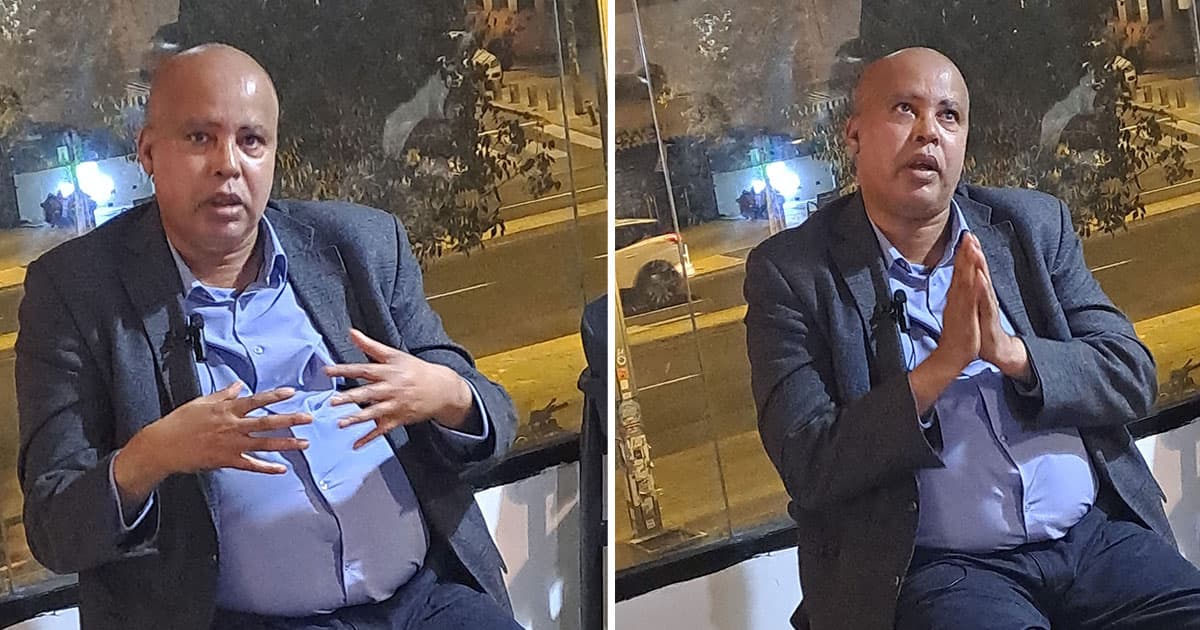
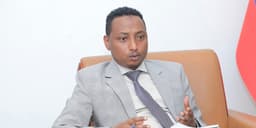
Tesfaye Yetayeh has served as Ethiopia’s envoy to Israel since March 2023.
His diplomatic career spans two decades in multiple regions across the globe. His first assignment took him to the United Kingdom, after which he joined IGAD as director in line with the Ethiopian Foreign Affairs regulations, serving there for four years. He later held senior diplomatic roles in Brussels, Stockholm, and later in Djibouti.
Upon returning to Addis Ababa, he served in a senior position at the Ministry of Foreign Affairs before becoming ambassador to Israel in 2023.
With an academic background in international diplomacy and organizational leadership, Tesfaye frames Ethiopia–Israel relations as having reached a point where both nations benefit equally. He notes that the current level of cooperation reflects years of accumulated diplomatic engagement and shared priorities, reinforcing the trajectory of balanced and mutually advantageous relations.
In an extensive interview with The Reporter’s Abraham Tekle, Tesfaye addressed a range of important topics, including the current state of bilateral relations between Ethiopia and Israel, economic, trade, and investment cooperation, health sector collaboration and other related support, as well as Ethiopia’s ongoing efforts to secure sea access. EXCERPTS:
The Reporter: How does the embassy describe the current state of bilateral relations between Ethiopia and Israel in areas such as economic cooperation, development support, agriculture, and infrastructure? What specific role does the Ethiopian embassy in Israel play in advancing collaboration in these sectors?
Tesfaye Yetayeh (Amb.): Ethiopia and Israel have a long-standing history. It begins in ancient times, when the Queen of Sheba visited Jerusalem and linked the Ethiopian lineage to the Solomonic dynasty. In modern times, bilateral relations began in 1956. In 1973, during the Yom Kippur War, diplomatic relations were strained. In 1989, rapprochement started, and both countries reopened embassies in their respective capitals. Since then, relations have been strong.
Economically, the relationship is solid. Israel purchases large amounts of Ethiopian coffee, sesame, tea, and other products. Several Israeli companies are involved in investment activities in Ethiopia—agriculture, agro-processing, textiles, mining, and other sectors. In addition, the Ethiopian embassy in Israel works to promote investment in Ethiopia. It organizes investment and trade partnership forums to showcase Ethiopia’s investment opportunities. The embassy facilitates exploratory visits, connects companies with Ethiopian counterparts, and engages government officials.
The embassy plays an active role in promoting investment, trade, and tourism. It has been working on these areas for years and aims to accelerate the work. Therefore, Israel remains a priority in Ethiopia’s foreign policy.
Agriculture is among the key areas of cooperation, and has been for decades. How would you describe Israel’s role in Ethiopian agricultural development?
For decades, the two countries have worked together to develop Ethiopia’s agricultural system. Israel has contributed significantly, especially in irrigation technology and efficient water use. This has been practiced for many years, and Israel has been successful in applying these techniques. They are now ready to share these technologies with Ethiopia and other countries.
The other thing Israel is known for is its horticultural production. They produce a large amount per unit area because they efficiently use water, fertilizer, and other inputs. So, Israel provides training to Ethiopian agronomists to help boost Ethiopia’s agricultural productivity. The training includes irrigation management and specialized training in avocado, mango, and other crop production. Many Ethiopian experts have received training both in Ethiopia and in Israel.
Israel’s Ministry of Foreign Affairs has an international development department called MASHAV, which is responsible for international cooperation. MASHAV conducts extensive training programs that support the development of Ethiopia’s agriculture and aim to make it more productive. Training of experts is the most important part of this cooperation, and these training programs are ongoing.
What are other notable areas of cooperation?
Health support is another sector that shows strong cooperation between our two countries. Volunteers regularly travel to Ethiopia to treat patients. There is a non-profit organization operating in Ethiopia that sends a professor, along with his assistants, to provide medical care. They treat people who are very poor, often living in remote areas, and who cannot afford medical services. They focus on cataract cases, trachoma, and other eye-related problems. In addition to performing treatments, they also provide eyeglasses so patients can see properly after the procedures. Since July, the team has gone to Ethiopia four times—once to Dessie, once to Hawassa, once to Bahir Dar, and once to Addis Ababa. They have treated many patients in different parts of the country.
Another source of support is the additional groups of doctors who travel to Ethiopia to provide medical assistance. They use advanced medical equipment that allows treatment without opening the body. This new method enables patients to receive care through minimally invasive techniques. These doctors not only treat patients but also train Ethiopian medical professionals. Many Ethiopian doctors have already received training in Israel. The training covers specialized medical fields, including surgery, ophthalmology, and cardiovascular care.
In addition, children under ten with heart problems are also brought to Israel for treatment. Cardiovascular surgeons and other specialists also receive training in Israel. Therefore, I can say that there is significant support and assistance from the Israeli side in both treatment and medical capacity-building.
What is your general overview of the status of the relationship between the two countries?
In my observation, bilateral relations between the two countries are multi-faceted relationships in both the economic and diplomatic sectors. We have strong bilateral cooperation, and we also work together in multilateral forums. We support each other at regional and international levels. The relationship is multi-dimensional. However, there is room to expand and improve it.
In my assessment, our relationship is strong, and we need to broaden its scope.
What diplomatic priorities is Ethiopia currently pursuing in its relations with Israel, particularly in areas such as labor migration and employment? What is the Ethiopian embassy’s role in this regard?
We are currently working on expanding overseas employment opportunities. In Israel, there is a labor market that employs migrant workers from the Philippines, Thailand, Sri Lanka, and India. As Ethiopia, we have submitted a draft labor agreement to the Israeli Ministry of Foreign Affairs, and they are reviewing it. The goal is to create employment opportunities for Ethiopian skilled and semi-skilled workers. So, once the agreement is signed, there will be contractual arrangements with companies, allowing Ethiopians to come regularly and work as housemaids, caregivers, or in other roles. We are waiting for the final signing, and discussions are ongoing to ensure Ethiopian workers can access these job opportunities.
There are also various engagements between Ethiopian universities and Israeli institutions, including cooperation with the Israeli Ministry of Foreign Affairs. These efforts focus on strengthening people-to-people relations, linking universities for research collaboration, and securing scholarships for Ethiopian students, especially at the master’s and PhD levels. We are working to establish a training partnership between Addis Ababa University and Ben-Gurion University. Last year, we created a training arrangement between the Department of Technology and the Science and Technology Universities. These partnerships support joint research, scholarships, academic exchanges, and other forms of collaboration.
We are also facilitating city-to-city training and cooperation. Several Ethiopian cities have sisterly arrangements with Israeli cities—for example, Gondar has a sisterly partnership with a smaller city near Tel Aviv, and the city of Ashkelon has also a sisterly arrangement with Bahir Dar, aiming to expand these arrangements to other towns in Ethiopia. In general, the purpose of these partnerships is to strengthen cultural, sports, music, and other exchanges, and to increase overall engagement between the two countries for the benefit of both nations.
In the context of Ethiopia’s investment sector, what specific initiatives or facilitative measures has your office implemented to attract and enable Israeli investment in Ethiopia’s strategic sectors, particularly to leverage the country’s substantial resource potential?
There is a lot of potential, but there are incentives in our investment and trade, you know. It’s not for Israel only, for the entire foreign direct investment, the investment regulation has got a lot of incentives. We have duty-free importation of capital goods and other services. So it’s not in particular for Israelis or Bete-Israelis, but foreign direct investment is treated in such a way.
What attracts investors is Ethiopia’s opportunities across various sectors such as agriculture, agro-processing, manufacturing, and digital development. Ethiopia’s geographic location also plays a major role, as it is considered a gateway to Africa. Additionally, Ethiopia has a population of 130 million, making it the second-most-populous country in Africa after Nigeria. With the African Continental Free Trade Area now operational, Ethiopia is part of a large regional market. These factors attract foreign direct investors from many countries, including Israel and the Bete-Israel community. So, there is no special or tailor-made incentive for Israelis, but they benefit from the same investment environment as others.
Israeli companies are involved in several sectors in Ethiopia. In mining, they are active and have strong expertise. In agriculture, especially in precision agriculture, Israeli companies are demonstrating modern methods—such as greenhouse systems fully controlled by computers, where agronomists can monitor exactly what each plant needs. Israeli companies also participate in agro-processing, manufacturing, and pharmaceuticals. In trade, Israel imports Ethiopian coffee and sesame. Sesame is widely consumed here in Israel. Therefore, these factors together create strong incentives for Israelis and the Bete-Israel community to engage in business in Ethiopia.
How would you characterize the current level of interest from Israeli investors in participating in Ethiopia’s investment sector?
Like I said earlier, they are already taking part in Ethiopian investment, trade, and tourism. We are encouraging Israeli investors and others to come. Israel calls itself a start-up nation, known for high-tech industries. These high-tech companies were not previously focused on Ethiopia, but now they see opportunities. Ethiopia’s payment system is transforming. The digital payment system is in place. They work with systems such as data storage and data mining. I am not a technical expert, so I cannot give the technical details, but they are interested in these areas.
They are also active in the mining sector. Ethiopia does not have diamonds, but Israel has strong experience in diamonds, gold, and other minerals. Ethiopia has many minerals except diamonds. These factors attract them to Ethiopia and encourage their participation.
How is the Ethiopian embassy in Israel addressing the concerns of Ethiopian citizens affected by the ongoing regional tensions and security situation in the country?
Well, it is part of our regular work. Normally, we engage with the Ministry of Foreign Affairs. The Ministry, through its relevant office and division, is responsible for covering our activities. We inform them about what is happening in our country, the situation, and other related developments. These are our normal engagements. We also communicate the position of the Government of Ethiopia regarding recent developments and ongoing issues.
Regarding the Ethiopian Jews community, we also engage with people of Ethiopian origin living here. Some of them hold Ethiopian Origin ID cards. Those who meet the requirements and prove their nationality are entitled to receive this ID card. Since most Ethiopians living here are Ethiopian Jews, they hold Israeli citizenship, and the Government of Israel is responsible for them. We simply sympathize with them, but they are Israeli citizens and fall under Israel’s jurisdiction.
Ethiopia has recently expressed strong interest in securing peaceful access to a sea outlet and is seeking the support of friendly countries in this effort. Given Israel’s political stake and active presence in the Red Sea region, how is the Israeli government responding to Ethiopia’s interest in obtaining sea access? In addition, Ethiopia continues to assert its rightful use of the Abbay River despite ongoing political tensions with Egypt, even after the completion of the GERD. What is the position of the Israeli government regarding Ethiopia’s rights over the Abay River and the broader dispute with Egypt?
Our core responsibility is to uphold Ethiopia’s national interests, which is why we serve in this position. Presenting and defending the country’s interests and rights is an essential part of our mandate. Historically, Israel supported Ethiopia’s right to access the sea. This support was not only to protect Ethiopia’s interests but also aligned with Israel’s own national concerns.
Israel believed that if Ethiopia lost access to the Red Sea, the area would fall entirely under Arab control. To prevent this, Israel provided military assistance to Ethiopia and helped establish elite forces such as the ‘Nebelbal’ unit during the reign of Emperor Haile Selassie. This reflects the depth of Israel’s engagement and the support extended at that time. Despite these earlier efforts, Ethiopia ultimately lost access to the Red Sea following Eritrea’s independence, leaving the country without access to ports such as Massawa and Assab and rendering it landlocked. This outcome also undermined Israel’s earlier attempts to help Ethiopia maintain access to the Red Sea.
Therefore, Ethiopia’s current request to regain access to the Red Sea through peaceful, mutually beneficial arrangements has not faced negative reactions from the Israeli government. Israel has not rejected Ethiopia’s position, partly due to the longstanding relationship between the two countries and Israel’s view of Ethiopia as a gateway to the rest of Africa. Israel frequently asks Ethiopia to facilitate stronger ties with African nations and to support its bid to regain observer status at the African Union.
Moreover, Israel also sees opportunities in Ethiopia’s extensive natural resources through investment, which further aligns its interests with Ethiopia’s maritime aspirations. Although Israel has not made an official statement supporting Ethiopia’s position on sea access, it is expected to stand with Ethiopia when the issue reaches its maturity stage.
Regarding the GERD, Egypt has tried to halt the project before, but the dam is now complete, marking a significant achievement for Ethiopia. Despite continued objections aimed at limiting Ethiopia’s use of the dam, Ethiopia has maintained a firm and transparent diplomatic position, earning recognition from the international community.
What role does your office need to play in supporting Ethiopia’s effort to secure sea access, and what future position can be expected from the Israeli government on this issue?
Like I said earlier, I am the sole representative of the government of Ethiopia in Israel, so it is my responsibility to present my government’s positions to Israeli officials. I hold meetings and make appointments to clearly communicate Ethiopia’s positions on various issues. This is entirely my duty. I have discussed Ethiopia’s request for access to the sea. I have also explained, on several occasions, matters related to the Grand Ethiopian Renaissance Dam, including its purpose, its contribution to development, and the concerns and pressure raised by Egypt and others.
In addition, I have also outlined Ethiopia’s intentions regarding regional cooperation, regional economic integration, and engagement with neighboring countries such as Eritrea. I regularly raise these issues as part of my work. So far, I have received very positive responses from Israeli officials, which is encouraging.
Comments
No comments yet. Be the first to leave a comment!
Leave a Comment

Society
Old Jaffa, New Tel Aviv
November 22, 2025
Society
“Now, It’s My Land”: Legal Reform Transforms Women’s Ownership in Rural Ethiopia
November 15, 2025

Society
A Gift of Technology — and Hope — for Koye’s Students
November 08, 2025
Society
Data for a Changing Climate: From Soil to Strategy
November 01, 2025

Society
Harnessing Data, Driving Innovation: Securing East Africa’s Water Future
October 25, 2025

Society
Bridging the Health Gap: Ethiopia’s push for Equitable Health
October 18, 2025
Art
Blending traditions: A taste of Italy, Crafted with Ethiopian ingredients
December 06, 2025
Art
Between Tradition and Trend: Ethiopia’s Musical Identity in the Modern Era
November 29, 2025
Art
Ethiopia’s Living Heritage in the Holy Land
November 22, 2025
Art
The Door that Never Closed: Honoring Getnet Enyew
November 15, 2025
Art
Echoes of Memory
November 01, 2025
Interview
December 06, 2025
Surgeon in Exile Offers an Alternate Perspective on Sudan’s Devastating War

Interview
December 06, 2025
Ethiopia-Israel Relations: Diplomacy, Investment, and Strategic Partnerships
Interview
November 29, 2025
A Peek into Ethiopia’s E-mobility Race

Interview
November 22, 2025
Nuclear Scientist Cautions against Ethiopia’s Newfound Atomic Ambitions

Interview
November 15, 2025
Unresolved Obligations, Widening Fractures Weigh Heavily on Tigray’s Opposition Parties

Interview
November 15, 2025
’We Recorded the Destruction Scientifically’
Interview
November 08, 2025
‘Something is Broken Somewhere’: A Think Tank on Bridging Intergenerational Gaps and Addressing the Youth Crisis in Ethiopia

Interview
November 01, 2025
Building a Resilient Health System: Ministry Banks on Alternative Financing Models amid Dwindling Aid