Society
November 01, 2025
Data for a Changing Climate: From Soil to Strategy




By
Abraham Tekle
Farming Smarter Across Eastern Africa with Data-Driven Solutions
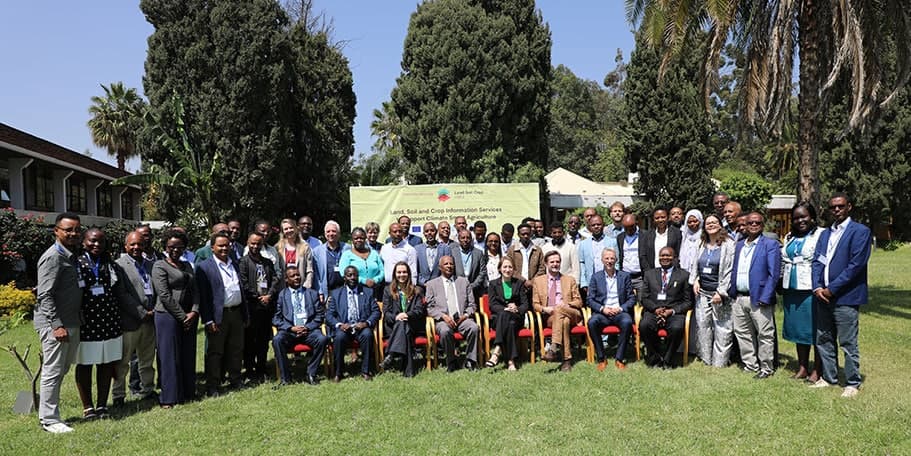
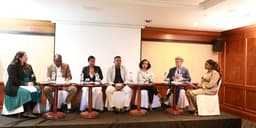
Agricultural researchers, policymakers, and development partners from across Eastern Africa gathered in Addis Ababa on October 28 to mark the conclusion of the Land, Soil, and Crop Information Services (LSC-IS) project — a regional effort that has quietly reshaped how data drives farming decisions in Ethiopia, Kenya, and Rwanda.
Launched in 2021 under the European Union–funded Development Smart Innovation through Research in Agriculture (DeSIRA) program, the initiative sought to strengthen climate-smart agriculture by transforming the way information on land health, soil fertility, and crop response is collected, shared, and applied.
At its core, the project established Land, Soil, and Crop Information Hubs—digital platforms hosted by national agricultural research institutions that integrate vast, previously fragmented datasets into systems that are Findable, Accessible, Interoperable, and Reusable (FAIR). These hubs translate technical data into practical tools, enabling farmers, extension officers, and policymakers to make more informed choices about land use, crop management, and climate adaptation.
“The partnerships we have built, the innovations we have introduced, and the knowledge we have shared are environments that must continue to thrive,” said Abera Deresa (PhD), chairperson of the Ethiopian Institute of Agricultural Research (EIAR).
Abera noted that the project has been pivotal in helping the three countries generate, manage, and share agricultural data for evidence-based decision-making. “Through collaborative efforts, we have improved access to reliable land, soil, and crop information, bridging the long-standing gap between data producers and users,” he said.
The LSC-IS initiative, supported by partners including the Netherlands Ministry of Foreign Affairs and the International Soil Reference and Information Centre (ISRIC), has already influenced agricultural productivity and policy development across the region. Beyond national institutions, it has also empowered local actors — from researchers to smallholder farmers — with knowledge and digital tools designed to build resilience in the face of climate change.
“Today’s workshop gives us an opportunity to reflect on what we have accomplished, share lessons learned, and discuss how best to sustain and scale the impact of LSC initiatives beyond the project’s life,” Abera said.
For many participants, the event marked not just the end of a project but the beginning of a shift — toward a culture of open agricultural data, shared innovation, and regionally coordinated climate action.
Over its five-year span, the project established integrated data hubs within the Ethiopian Institute of Agricultural Research (EIAR), the Kenya Agricultural and Livestock Research Organization (KALRO), and the Rwanda Agriculture and Animal Resources Development Board (RAB). According to project organizers, these hubs have become cornerstones for centralizing and standardizing agricultural data, giving governments new tools to plan for food security and climate resilience.
But the project’s impact went beyond data integration. A significant portion of its effort focused on building national capacity—training technical staff to manage and sustain the systems independently. It also prioritized user engagement, working directly with farmers and extension officers to help them apply research findings in the field, adopt climate-smart practices, and manage land more sustainably.
“In Ethiopia, the future of these data systems is fully secure with the EIAR,” said André Kooiman, senior sustainable land management expert at the International Soil Reference and Information Centre (ISRIC), noting that the technical and institutional results have been successfully embedded in national systems.
Representing the EU Delegation to Ethiopia, Julia Walschiebauer highlighted how the new data hubs are designed to meet the needs of multiple stakeholders—from policymakers drafting agricultural strategies to farmers making planting decisions. “They provide vital support for planning and resilience building,” she said.
Rik van den Boog, director of ISRIC – World Soil Information, told The Reporter that while his institute develops soil data products worldwide, the LSC initiative recognizes that soil data alone is not enough.
“Even if you understand the soil, you still cannot make a proper decision—whether as a farmer or policymaker—without additional data,” he said. “That’s why we developed IT-based platforms that integrate multiple layers of information—what we call ‘data cubes’—to be able to use the data easily.”
He added that such integrated systems also help governments design smarter agricultural subsidy strategies, aligning incentives with evidence.
Led by Wageningen University and Research (WUR), the LSC-IS consortium brings together a network of international and national partners including ISRIC, the International Livestock Research Institute (ILRI), KALRO, EIAR, RAB, the World Agroforestry Centre (ICRAF), the International Union for Conservation of Nature (IUCN), and the German Aerospace Center (DLR).
Government representatives and technical experts at the workshop described the project as laying the foundation for evidence-driven agricultural transformation across Eastern Africa.
Comments
No comments yet. Be the first to leave a comment!
Leave a Comment

Society
Old Jaffa, New Tel Aviv
November 22, 2025
Society
“Now, It’s My Land”: Legal Reform Transforms Women’s Ownership in Rural Ethiopia
November 15, 2025

Society
A Gift of Technology — and Hope — for Koye’s Students
November 08, 2025
Society
Data for a Changing Climate: From Soil to Strategy
November 01, 2025
Society
Harnessing Data, Driving Innovation: Securing East Africa’s Water Future
October 25, 2025
Society
Bridging the Health Gap: Ethiopia’s push for Equitable Health
October 18, 2025
Art
Blending traditions: A taste of Italy, Crafted with Ethiopian ingredients
December 06, 2025
Art
Between Tradition and Trend: Ethiopia’s Musical Identity in the Modern Era
November 29, 2025
Art
Ethiopia’s Living Heritage in the Holy Land
November 22, 2025
Art
The Door that Never Closed: Honoring Getnet Enyew
November 15, 2025
Art
Echoes of Memory
November 01, 2025
Society
November 22, 2025
Old Jaffa, New Tel Aviv
Society
November 15, 2025
“Now, It’s My Land”: Legal Reform Transforms Women’s Ownership in Rural Ethiopia
Society
November 08, 2025
A Gift of Technology — and Hope — for Koye’s Students
Society
November 01, 2025
Data for a Changing Climate: From Soil to Strategy
Society
October 25, 2025
Harnessing Data, Driving Innovation: Securing East Africa’s Water Future
Society
October 18, 2025
Bridging the Health Gap: Ethiopia’s push for Equitable Health

Society
October 18, 2025
Africa’s Ticking Clock: The Coming Cancer Crisis

Society
October 11, 2025
Smart Tech and Soft Loans: Financing innovation to Transform Ethiopia’s Smallholder Agriculture