In Depth
November 08, 2025
On the Edge Again: Drums of War Blare over Muted Peace Anniversary Commemorations




By
Nardos Yoseph
When the guns fell silent after the Pretoria Peace Agreement of November 2022, the nation along with the world exhaled with relief.
Two years of brutal war between the federal government and the Tigray People’s Liberation Front (TPLF) had torn Ethiopia apart, reportedly leaving hundreds of thousands dead and millions displaced.
The agreement, mediated under the African Union’s auspices, promised an end to the carnage and a gradual political normalization in the country’s north. Now, three years later, that promise appears to be under severe strain.
From renewed accusations of border and administrative boundaries violations and not-so-hidden military mobilizations to mutual allegations of betrayal, the language between Mekelle and Addis Ababa has hardened accompanied by occasional disgruntled and discontented commentaries and responses from Asmara.
Many observers who spoke to The Reporter this week say a second round of war now appears inevitable—or may have just slowly reignited over the last few days.
Meanwhile, officials on both sides now speak in tones uncomfortably reminiscent of the months before war first broke out in 2020.
The latest flashpoint came from the Afar Regional State, where officials accused “TPLF forces” of crossing into their territory and opening an attack on pastoralist communities in an act they described as a “clear violation of the Pretoria Agreement.”
According to a statement from the Afar Region Communication Bureau, on Wednesday, November 5, 2025, TPLF fighters “crossed into the Afar Region through border areas in Zone Two, Megale Woreda, particularly in Tonsaa Kebele, as well as the Wara’a and Milki localities,” firing heavy weapons at innocent Afar pastoralists.
”While opening fire in Tonsa kebele, despite appeals from peace-loving Afar elders urging them to withdraw, the TPLF forces responded with defiance, saying ‘We will not turn back,’ and escalated the confrontation,” reads the statement from the regional administration.
Officials in Afar say they will defend themselves from external aggression as this week’s development rekindles fears of another cycle of bloodshed along Ethiopia’s most fragile front.
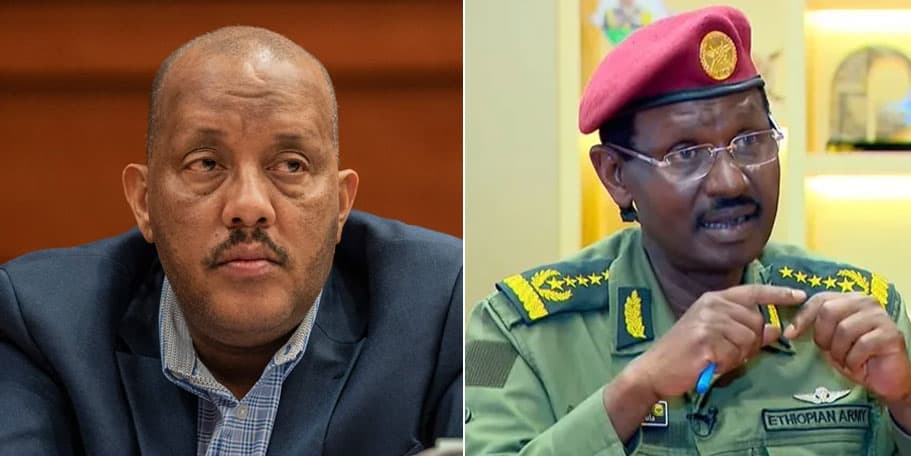
The federal government has yet to issue any official statements, but Getachew Reda, former Tigray Interim Administration (TIA) president and current advisor to the PM, weighed in via social media on Thursday.
In an X post, Getachew accused the TPLF, which he referred to as “those left behind,” of working to undermine the Pretoria agreement and argued that the federal government has so far turned a blind eye to the alleged machinations.
“They are now attempting to drag the federal government back into another conflict,” he wrote, describing such a move as “foolishness.”
Getachew went further, alleging that TPLF is executing a mission on behalf of Shaabiya (the Eritrean regime) and naming senior military leaders in Tigray, including General Fisseha Kidanu and General Yohannes Weldegiorgis (Medid), as central figures in the operation.
He characterized TPLF’s alleged plan to use the closure of the Afar route, an essential corridor that handles the vast majority of Ethiopia’s international trade, as a tool for negotiation as “sheer stupidity.”
Getachew also stressed that both Tigrayan forces (aka TDF) and those operating in Afar under the moniker ‘Tigray Peace Forces’ (TPF) have no interest whatsoever in engaging in conflict with the federal government.
The former TIA chief urged them to safeguard themselves from being used as tools in Eritrea’s political agenda, reiterating the importance of remaining independent from Asmara’s influence.
On Friday, the TIA, now led by Lt. General Tadesse Werede, denied that any attack had taken place in Afar.
“This accusation is entirely baseless,” reads a TIA statement. “There has been no violation of the Afar-Tigray border, from either side.”
The TIA had issued another statement decrying “recurring provocations by armed groups in Afar” and emphasizing its continued commitment to dialogue.
However, it also accused “war-mongering elements within the federal government” of undermining the peace process.
The exchange left the impression of an unraveling ceasefire, with each side accusing the other of provocation while insisting on its own restraint.
In a rare public appeal issued ahead of the reported Afar incident, General Migbey Haile, a TDF commander, called on forces opposed to war and seeking peace—as well as all Ethiopians—to stand with the army and the people of Tigray.
“We call on all entities in our surroundings who oppose war—whether Afar, Amhara, Agaw, or Eritrea—to stand with the army and the people of Tigray. We do this not to dwell on the past, but because we do not want it to be repeated,” he said.
He noted that the region lies along a strategic border between Ethiopia and Eritrea, emphasizing that issues related to sovereignty and war crimes must be addressed through legal means, while expressing readiness to work together for peace.
“If there is any force that says it will still continue to cause destruction, we tell them to please stop and restrain themselves,” the General noted.
In parallel, the TPLF has also issued a statement insisting that “the [Pretoria] agreement is being undermined” but not from its side.
In a communiqués issued last week, the TPLF, which was struck off the list of registered political parties by the National Election Board of Ethiopia (NEBE) more than five months ago, responded to remarks made by Prime Minister Abiy Ahmed (PhD) during his address to Parliament on October 28.
In it, the TPLF argued that by reducing its legal status into a technical matter and “by acting in a way that renders the agreement meaningless through selective and arbitrary interpretation, the federal government continues to erode the essence of the agreement.”
“Although the peace agreement was signed between the federal government and the TPLF, some are attempting to portray it as an informal discussion among individuals rather than a formal institutional process. This was said in a parliament session conducted in the absence of Tigray’s representatives,” reads the statement.
Speaking about the peace agreement during his most recent parliamentary address, the Prime Minister cited an Amharic proverb:
“While the one who gave birth is still alive, the one who swaddled the baby says, ‘I am the mother.’”
The TPLF, in its counter statement, said this metaphor was symbolic of how the Ethiopian government views the Pretoria peace agreement “not as an instrument for peace but rather as a playing card being used to facilitate acts of genocide.”
The statement noted that when the agreement was signed, the individuals who represented Tigray—Getachew Reda, General Tsadkan Gebretensae, and Assefa Abraha—were all representatives assigned by the TPLF.
“The government was well aware that members of the delegation were not the actual owners or signatories of the agreement,” it reads.
“The truth,” the statement added, “is that the Prime Minister’s analogy stands inverted; it is he and his government who have turned the agreement into an orphan, stripping it of its mother.”
The TPLF argues that those individuals were not the architects of the agreement but were tasked with implementing it, adding that “the agreement, which sought to end a war that shocked the world and drew international attention, has been undermined, indicating that there has been no remorse or accountability for previous atrocities.”
The TPLF further warned that if the federal government fails to halt its preparations for another round of war, “the consequences will be dire in every direction,” urging “the responsible body” to act promptly to prevent further deterioration.
The TPLF alleges the federal government is mobilizing the military in neighboring regions and claims there is sufficient evidence that Addis Ababa is not committed to implementing the peace agreement.
The party appealed to “the African Union Panel, other guarantor bodies, and the international community—who have been repeatedly urged to review the implementation of the agreement—to recognize that the peace accord is at serious risk.”
In its latest statement, the TPLF once again called for an independent evaluation of the agreement’s implementation.
Meanwhile, as tensions and finger-pointing mounted over the past two weeks, the TIA cabinet issued its own warning about developments in western Tigray.
It stated that as per the agreement, an interim administration was established with the understanding that, over time, a legitimate government would be formed. However, The TIA cabinet alleges it is being sidelined under the pretext of returning IDPs to western Tigray.
While acknowledging that Pretoria had aimed to restore constitutional autonomy, ensure the safe return of displaced persons, reconstruct the region and revive regional governance, the TIA said many of those objectives “remain unaddressed.”
The TIA also called for the establishment of a joint framework for cooperation that would uphold the spirit of the peace agreement, stressing that there is no alternative to dialogue and sincerity.
It warned that any course of action outside this framework could bring further harm and destruction and that any attempt to deviate from the agreement would not be acceptable.
On a varying tone, TIA Deputy President Amanuel Assefa went further in an interview with regional state-affiliated Dimtsi Weyane Television, accusing “certain groups backed by the federal government” of attempting to “permanently alter the territorial and demographic composition of the region,” referring to western Tigray.
He alleged that “new settlers in Western Tigray” are being treated as rightful owners of homes, farmland, and businesses seized by force,” despite earlier understandings that displaced Tigrayans would return safely.
“After discussions between representatives of the federal government and TIA an agreement had initially been reached. According to that earlier understanding , those who had settled in the area would remain in place while the displaced residents were to return and, together with the local population, aim to gradually pave the way for a referendum,” said Amanuel.
However, the TIA Deputy alleges that this was later reversed.
”When the matter began to be discussed more openly, the federal government declared, ‘There is no such thing’” dismissing the issue altogether,” he said. “Now, what was once agreed upon has been replaced by two new ‘options.’ The return of displaced people is no longer being implemented because the forces that seized the area have not withdrawn. The new settlers remain, and the imposed administrations have not been dissolved.”
He further accused certain unnamed groups of “betrayal,” accusing them of working with Addis Ababa to undermine and dismantle the region.
Amanuel claims the efforts are geared towards altering the region’s administrative and geographical structure, and changing its demographics in the long term.
As tensions sharpened, the European Union and Norway, along with the embassies of 21 EU member states, released a joint statement marking the Pretoria Agreement’s third anniversary.
They praised progress in “the silencing of guns, resumption of basic services, and the beginning of reintegration,” but warned that sustaining peace “requires continued political will and inclusive dialogue.”
The communiqué urged both the federal government and the TPLF “to begin political dialogue without delay, well before the next national elections,” while reaffirming support for transitional justice mechanisms “centered on truth, accountability, and reconciliation.”
The timing was not accidental: the statement came amid deepening mistrust, mirrored in TPLF’s own anniversary declaration accusing Addis Ababa of “deliberate reluctance” and “manipulative delay” in implementing the accord.
The group claimed federal leaders were “preparing for a new round of war,” mobilizing militias near Tigray’s borders, and spreading “hate propaganda.”
The military establishment issued the sharpest speech yet in response to the developments.
Speaking in Bishoftu on October 24, Field Marshal Berhanu Jula, chief of general staff of the Ethiopian National Defense Forces (ENDF), delivered his most forceful warning since the signing of the Pretoria Cessation of Hostilities Agreement.
In a nationally televised speech marking the fifth anniversary of the attack on the Northern Command that sparked the last conflict, the Field Marshal accused the TPLF of engaging in conspiracies and plots over the last three years—actions he said were more than enough grounds to return to war.
“If we were a war-loving government, if we were a war-loving defense force,” Berhanu declared, “the conspiracies, acts, and plots that TPLF has committed after Pretoria would have been enough to go back to war.”
Observers note that the commemoration, held at the Bishoftu Air Force Training Center and attended by senior officers including Deputy Chief of Staff General Abebaw Tadesse, was as much a remembrance as it was a stark message.
Berhanu’s 40-minute speech, both historical and accusatory, signaled that patience within the military may be wearing thin.
The Field Marshal began by revisiting November 2020.
“The attack that was carried out five years ago was a betrayal and a disgrace,” he said, emphasizing that his words were directed at TPLF as an organization, “not at the people of Tigray.”
He went further, noting that even within TPLF, there were internal divisions.
“Even TPLF itself is not a monolith,” he said. “Sometimes things become collective and lead to consequences that harm the country.”
At the center of his speech was what he repeatedly described as a shadowy power structure within TPLF, which he called the ‘Gujile’ — a term he used to describe a conspiratorial core that, he claimed, has operated for decades.
“The act was carried out by a particular TPLF faction, which habitually engages in conspiracies,” Berhanu said. “As long as that power has not been uprooted, Ethiopia will not find peace.”
Without naming names, he alleged that this group’s influence stretches back half a century, linking it to the origins of TPLF and its founders.
Throughout the speech, the term betrayal was mentioned time and again.
“This force that was created inside Ethiopia is a spirit of betrayal, a force of betrayal,” he said. “Until this force is uprooted, Ethiopia will not have peace.”
The Field Marshal went on to list what he described as TPLF’s post-Pretoria provocations including resuming military training, and reassembling demobilized combatants under the DDR (Disarmament, Demobilization, and Reintegration) program.
“The conspiracies, the defiance, the acts — all these are enough to go back to war,” he repeated. “But in any war, it is the TPLF that loses and the people of Tigray will be the ones who suffer. We have already seen that in the last war.”
He also accused TPLF of forming new alliances with Eritrea’s ruling party in an unconstitutional and treasonous partnership he termed “Tsimdo.”
“To cross a border by itself is unconstitutional,” he said. “While crying out, ‘they [Eritrea] committed genocide against me [Tigray region],’ and at the same time saying, ‘Shaabiya is our friend, our ally; we will betray Ethiopia together, weaken Ethiopia together.’ That kind of thing is happening. This, in another form, is a manifestation of betrayal.”
Berhanu further alleged that TPLF had supplied “bullets and plans” to Fano, the Amhara armed group now locked in intermittent conflict with the federal government.
“In the past, on the Northern Wollo front, [TPLF] connected with Fano, entered the regional state, made plans, gave them leadership, and fought together. But we kept silent,” he said. “Because we are the government. We have responsibility. We do not respond to every provocation. But if it goes past the limit, then we will have no choice.”
Even as he issued repeated warnings, Berhanu insisted that the military remained restrained.
“We have seen all of this, and yet we did not return to war,” he said. “What they are doing now is harmful, but if war comes again, it will bring even greater harm. That is why we have chosen patience.”
Yet patience, he warned, has limits.
“No matter how much we are provoked, if attacked, if it becomes like the previous Northern Command, our defense will not cease. We alone cannot prevent war,” said Berhanu.
He reiterated that the Ethiopian government and its defense forces do not want another war. Yet their language left open the possibility, even the readiness, for one.
“We are not eager. We do not stir up war. We do not want war,” Berhanu said near the end of his address. “But if something crosses the line of our peace and our national interest, and crosses the border, then we must defend. That is what we have prepared and armed for.”
It was a sobering end to a fiery address—one that blended military commemoration with indictment, and signaled that beneath Ethiopia’s fragile post-war calm, the guns may not be too far from readiness.
Amid the escalating rhetoric, civil societies and opposition political parties in Tigray urge all sides not to return to conflict. Among those who champion a sustainable peace is the Tigray Independence Party (TIP).
It issued one of its strongest warnings yet in a statement marking the Pretoria anniversary this week.
TIP said growing tensions between the federal government and TPLF could “lead to a renewed cycle of war and destabilize the entire Horn of Africa.”
The party accused “a self-proclaimed military force that considers itself above the law” of working with TPLF and Eritrean forces to “provoke new conflict.” It urged the accord’s guarantors to pressure both sides to fully implement the peace deal.
TIP further criticized both the TPLF leadership and senior military figures in Tigray, saying they had “forced the people of Tigray to pay a heavy price.” It described Prime Minister Abiy’s remarks comparing the Tigray conflict with others as “pouring salt on a wound” and “a pretext to continue systemic ethnic cleansing.”
To TIP’s leaders, the core of the problem lies in legitimacy.
“Making the Pretoria Agreement effective,” reads the statement, “requires the establishment of a lawful, inclusive, and representative administration in the region.”
Observers and political analysts note that the statements marking Pretoria’s third anniversary, taken together, reveal a peace process losing coherence. Once-muted disputes over implementation have turned into mutual recriminations, regional actors are openly threatening to defend borders; and military leaders are speaking of betrayal and readiness for war
The TIA’s plea for dialogue and sincerity, the EU’s call for political will, and the army chief’s vow to defend sovereignty all point to a country edging back toward confrontation even as each insists it seeks peace.
Analysts note that beneath the rhetoric lies a structural impasse: Pretoria was a ceasefire agreement masquerading as a political settlement. Its silence on core constitutional and territorial questions, including the status of western Tigray, security arrangements, and the TPLF’s political recognition, have now floated back up to the surface.
Observers note that for the moment, Ethiopia’s northernmost region remains quiet, but the calm feels increasingly brittle. The peace that Pretoria promised still exists on paper. On the ground, it hangs by a thread.
Comments
No comments yet. Be the first to leave a comment!
Leave a Comment

Society
Old Jaffa, New Tel Aviv
November 22, 2025

Society
“Now, It’s My Land”: Legal Reform Transforms Women’s Ownership in Rural Ethiopia
November 15, 2025

Society
A Gift of Technology — and Hope — for Koye’s Students
November 08, 2025
Society
Data for a Changing Climate: From Soil to Strategy
November 01, 2025

Society
Harnessing Data, Driving Innovation: Securing East Africa’s Water Future
October 25, 2025

Society
Bridging the Health Gap: Ethiopia’s push for Equitable Health
October 18, 2025
Art
Blending traditions: A taste of Italy, Crafted with Ethiopian ingredients
December 06, 2025
Art
Between Tradition and Trend: Ethiopia’s Musical Identity in the Modern Era
November 29, 2025
Art
Ethiopia’s Living Heritage in the Holy Land
November 22, 2025
Art
The Door that Never Closed: Honoring Getnet Enyew
November 15, 2025
Art
Echoes of Memory
November 01, 2025

In Depth
December 06, 2025
War of Words with Cairo Takes on a New Tone

In Depth
November 29, 2025
Africa’s Crippling Debt Burden on Full Display at Eventful Johannesburg G20 Summit

In Depth
November 22, 2025
Marburg Outbreak Tests a Health System Grappling with Financial Constraints

In Depth
November 15, 2025
Insurance at an Inflection Point: Why Ethiopia’s Fast-Growing Sector Barely Contributes to GDP

In Depth
November 08, 2025
On the Edge Again: Drums of War Blare over Muted Peace Anniversary Commemorations

In Depth
November 01, 2025
Europe’s “Distorted” Bet on Cairo Raises Furore, Questions in Addis Ababa

In Depth
October 25, 2025
Freedom of Movement Under Siege Ahead of 2026 Vote

In Depth
October 18, 2025
Ethiopia’s Mining Law