In Depth
December 06, 2025
War of Words with Cairo Takes on a New Tone




By
Nardos Yoseph
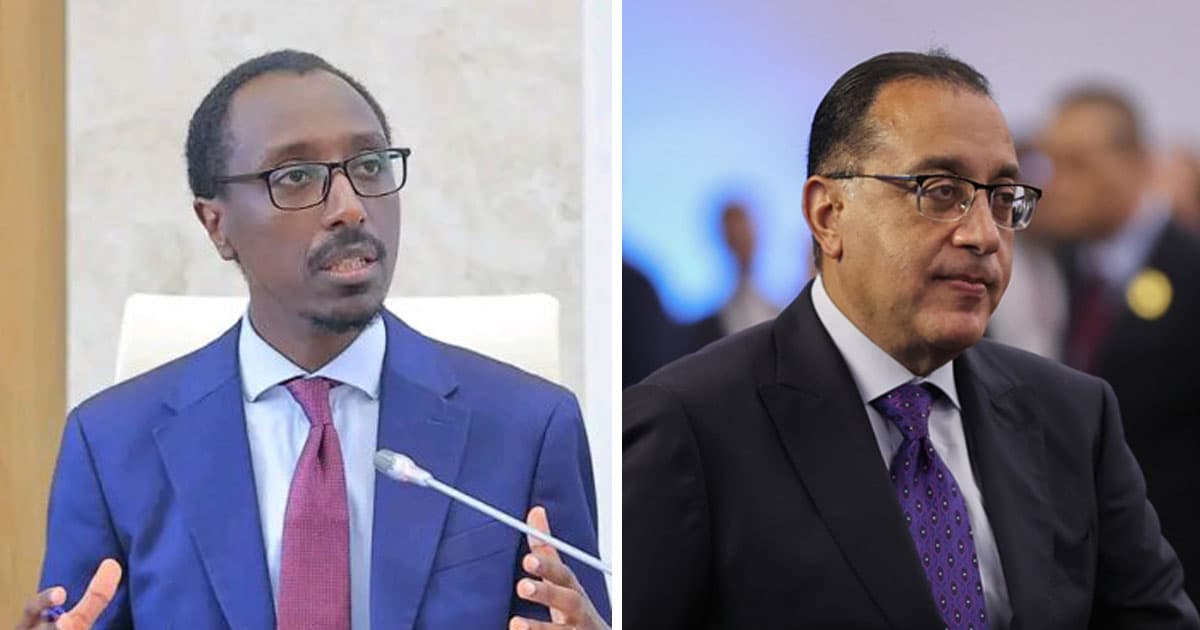
Ethiopia has sharply escalated its diplomatic language against Egypt, accusing Cairo of abandoning meaningful dialogue over the Nile, issuing “veiled and not-so-veiled threats,” and attempting to revive what it calls a “colonial mentality” over shared water resources.
In a lengthy statement released on Wednesday, December 3, the Ministry of Foreign Affairs (MoFA) said Egypt’s posture demonstrates an entrenched refusal to adapt to the political, demographic, and developmental realities that define the 21st-century Nile Basin.
The statement marks one of Addis Ababa’s most forceful public responses in recent months, or even years, and came following a string of increasingly direct warnings from senior Egyptian officials throughout 2025.
The strongly worded statement also signals a shift in tone from Ethiopia, which for months remained largely silent while Egypt intensified its diplomatic campaign at regional and global forums.
The Ministry’s latest message asserts that Ethiopia does not and will not seek “permission from any country” to use the waters of the Abbay basin (Blue Nile), insisting that Cairo’s repeated objections to the operation of the Grand Ethiopian Renaissance Dam (GERD) are grounded in outdated assumptions of entitlement.
Analysts say Ethiopia has now disclosed its position, with the country seemingly reaching a breaking point in a long-simmering dispute.
Although the two countries have verbally clashed for more than a decade over the construction of the GERD, Addis Ababa’s new statement suggests that the government views Cairo’s recent growing rhetoric as crossing a line.
For Ethiopia, the Ministry said, the pattern is no longer one of political disagreement but a clear “categorical rejection of dialogue,” deliberately designed to obstruct regional cooperation.
According to the statement, Egypt’s refusal to negotiate has now become “overt,” ending what Ethiopian officials say were “years of public performance” in which Cairo took part in talks but allegedly kept decision-makers from compromising or engaging in substantive talks.
The Foreign Ministry urged all concerned actors, a seemingly implicit reference to regional governments, the African Union, and major partners including the United States and EU, which have all put on an effort to get the two countries seat around the table previously, to denounce what it framed as Cairo’s dangerous shift toward militarized language.
MoFA’s unusually sharp tone comes after a year in which Egyptian officials repeatedly announced that Ethiopia’s operation of GERD constituted a threat to Egypt’s national security, regional stability, and even “the lives of millions.”
In recent months, Egypt’s position regarding Nile and GERD has been increasingly sharpening and a review of the nation’s official statements in 2025 reveals a steadily intensifying pattern.
In October, Egypt’s Ministry of Water Resources and Irrigation issued its strongest public condemnation to date.
It accused Ethiopia of “reckless and irresponsible” management of GERD, alleging that sudden water releases had led to downstream flooding. The Ministry said Ethiopia’s actions represented a “direct threat to the lives and security of the peoples of the downstream states,” and warned that its patience was wearing thin.
The statement said Egypt “cannot ignore” such behavior, a phrase interpreted by regional analysts as an indication that Cairo was preparing the ground for stronger diplomatic or other means of posturing.
A month earlier, Egypt escalated the dispute to New York.
Its government submitted a formal letter to the United Nations Security Council (UNSC), accusing Ethiopia of violating international law by continuing to fill and operate GERD without a trilateral agreement.
In the letter, Egypt asserted that it “will not allow Ethiopia to impose unilateral control over shared water resources,” vowing to “defend its existential interests” through “all measures permitted under the UN Charter” and the wording of the letter had raised an alarm among diplomatic circles given its potential implications.
Earlier, in July, Badr Abdelatty, Egypt’s foreign minister, issued another televised warning, declaring that Egypt “reserves the right to defend itself” against the effects of Ethiopia’s “unilateral” actions.
He accused Ethiopia of “endangering regional equilibrium” and warned of consequences should Addis Ababa continue operating GERD without what Cairo considers a binding agreement.
This too was preceded by a warning from the Egyptian Prime Minister pushing the “matter of existence” narrative.
A few weeks before the Egyptian Foreign Minister’s comments, Prime Minister Mostafa Madbouly reiterated the long-standing message that the Nile is a “matter of existence for Egypt and not open to compromise.”
While not explicitly threatening, analysts widely viewed this repetition as part of a coordinated campaign to increase and intensify international pressure over the dispute.
However, after months of official threats, Ethiopia this week broke its silence over the matter. Prior to the Ministry statement, Ethiopia had largely refrained from responding directly to these warnings. Officials in Addis Ababa had instead stressed their preference for African Union-led dialogue, technical cooperation, and collaboration between riparian countries.
Wednesday’s statement ended that restraint.
“The repeated threats show the failure of the Egyptian government to come to terms with the realities of the 21st century,” the Ministry stated, arguing that Egypt’s approach is “not compatible with contemporary international law, basin-wide cooperation norms, or the developmental needs of upstream countries.”
Ethiopia said some Egyptian officials “think they have a monopoly over the waters of the Nile” and rely on “colonial-era treaties” and concepts of “historical rights” that Ethiopia has never recognized.
Addis Ababa also accused Cairo of regional destabilization. In one of the most striking parts of the statement, Ethiopia accused Egypt of undermining regional stability not only over the water dispute, but also through broader political strategies.
According to the Ministry, Egypt has sought to “engineer pliant, weak and fragmented client states” across the Horn of Africa, using “a campaign of destabilization focused on but not limited to Ethiopia.”
While the statement did not detail specific incidents, analysts who spoke with The Reporter note that Ethiopia has long suspected Egypt of supporting political factions or diplomatic alliances that could pressure Addis Ababa on Nile issues. Cairo has consistently denied such accusations.
“This misguided approach and effort is a failure of imagination and leadership,” the statement reads, calling Egypt’s tactics an “obsolete playbook that has never cowed Ethiopia.”
The East African nation reasserted its rights over the Abbay basin and central to Ethiopia’s message is the assertion that it contributes the vast majority of water that sustains the Nile.
The Ministry emphasized that Ethiopia contributes roughly 86 percent of the Nile’s total volume through the Abbay River. As such, it said, Ethiopia has “full sovereign rights to utilize water resources within its borders.”
“Ethiopia, like all other riparian states, has a right to utilize this natural resource,” the Ministry declared. Addis Ababa stressed that the principle of “equitable and reasonable utilization,” a cornerstone of modern international water laws, supports its position.
The Ministry underscored that Ethiopia “has no obligation to seek permission from anyone” to develop the water resources inside its territory.
Beyond the legal and political arguments, Ethiopia’s statement framed GERD as a regional development project rather than just a national one.
Ministry officials described GERD as an “embodiment of Africa’s self-reliance and progress,” repeating Ethiopia’s long-held argument that the dam provides substantial benefits to Egypt and Sudan through regulated water flow, reduced flooding, and hydropower integration opportunities.
Ethiopia also reiterated its stance that the dam is designed for electricity generation not for water diversion, an assurance Addis Ababa has provided since construction began more than a decade ago starting from the inception of the dam.
Despite its confrontational tone, the Ministry said Ethiopia remains open to dialogue, cooperation, and technical coordination “based on fairness and equity.” It insisted that the solution lies in “win-win outcomes” rather than confrontation.
However, the statement made equally clear that Ethiopia will not yield to coercive pressure.
Ethiopia says it will continue exercising its rights under international law, reject threats of force, and resist what it called Egypt’s attempts to impose unilateral veto power over upstream development.
“What the world needs, what Africa needs is more cooperation and dialogue, not confrontation and conflict,” the statement concluded.
Analysts who spoke with The Reporter noted that the escalating rhetoric has raised fears of renewed tension in an already fragile region.
Speaking anonymously, a Nile politics expert noted several potential consequences including increased diplomatic pressure, shifting regional alliances, risk of miscalculation, internal pressures in both countries, as well as implications for the African Union.
He stressed that Egypt’s referral of the issue to the UN Security Council signals its intent to internationalize the dispute. Ethiopia, however, has consistently argued that African-led mechanisms, not global bodies are the appropriate forum.
On the other hand, the expert explained how the recent disclosure of Ethiopia’s strong position might strengthen some shifting alliances.
”Horn of Africa states continue to navigate relations with both countries,” he said. “Ethiopia’s accusation that Egypt is seeking to influence regional politics could heighten mistrust and reshape alliances in the Red Sea and Nile Basin regions.”
According to analysts, while neither country has indicated imminent military action, the repeated use of existential and defensive rhetoric widens the margin for misunderstanding. Regional analysts also warn that messaging designed for domestic audiences can inadvertently raise regional tensions.
The simmering dispute between the two countries and Ethiopia’s strong stance comes at a time of domestic reform and post-conflict stabilization, while Egypt continues to grapple with economic pressures and public concerns over water scarcity.
On the other end of the spectrum, experts state that the AU’s ability to re-energize trilateral talks may be tested once again. Previous rounds have stalled over sequencing, data exchange, and legal frameworks for long-term operation.
For now, Ethiopia’s latest statement marks a decisive moment in the evolution of the GERD dispute. After months of silence, Addis Ababa is signaling that Cairo’s rhetoric has crossed into territory it can no longer ignore.
But despite the sharpness of its tone, Ethiopia still frames cooperation as the path forward. Whether Egypt will shift from confrontation to negotiation and whether both countries can break years of mistrust still remains uncertain.
What is clear is that the Abbay, the Nile, and the Grand Renaissance Dam remain at the center of one of Africa’s most consequential geopolitical challenges. And as both states harden their rhetoric, the stakes in diplomacy, development, and regional stability continue to rise.
Comments
No comments yet. Be the first to leave a comment!
Leave a Comment

Society
Old Jaffa, New Tel Aviv
November 22, 2025

Society
“Now, It’s My Land”: Legal Reform Transforms Women’s Ownership in Rural Ethiopia
November 15, 2025

Society
A Gift of Technology — and Hope — for Koye’s Students
November 08, 2025

Society
Data for a Changing Climate: From Soil to Strategy
November 01, 2025

Society
Harnessing Data, Driving Innovation: Securing East Africa’s Water Future
October 25, 2025

Society
Bridging the Health Gap: Ethiopia’s push for Equitable Health
October 18, 2025
Art
Blending traditions: A taste of Italy, Crafted with Ethiopian ingredients
December 06, 2025
Art
Between Tradition and Trend: Ethiopia’s Musical Identity in the Modern Era
November 29, 2025
Art
Ethiopia’s Living Heritage in the Holy Land
November 22, 2025
Art
The Door that Never Closed: Honoring Getnet Enyew
November 15, 2025
Art
Echoes of Memory
November 01, 2025

In Depth
December 06, 2025
War of Words with Cairo Takes on a New Tone
In Depth
November 29, 2025
Africa’s Crippling Debt Burden on Full Display at Eventful Johannesburg G20 Summit

In Depth
November 22, 2025
Marburg Outbreak Tests a Health System Grappling with Financial Constraints

In Depth
November 15, 2025
Insurance at an Inflection Point: Why Ethiopia’s Fast-Growing Sector Barely Contributes to GDP

In Depth
November 08, 2025
On the Edge Again: Drums of War Blare over Muted Peace Anniversary Commemorations
In Depth
November 01, 2025
Europe’s “Distorted” Bet on Cairo Raises Furore, Questions in Addis Ababa

In Depth
October 25, 2025
Freedom of Movement Under Siege Ahead of 2026 Vote

In Depth
October 18, 2025
Ethiopia’s Mining Law