ethiopian-news
January 14, 2025
Ethiopia Approves Landmark Property Tax Law Amid Debate on Economic Impact




By
Addis Insight
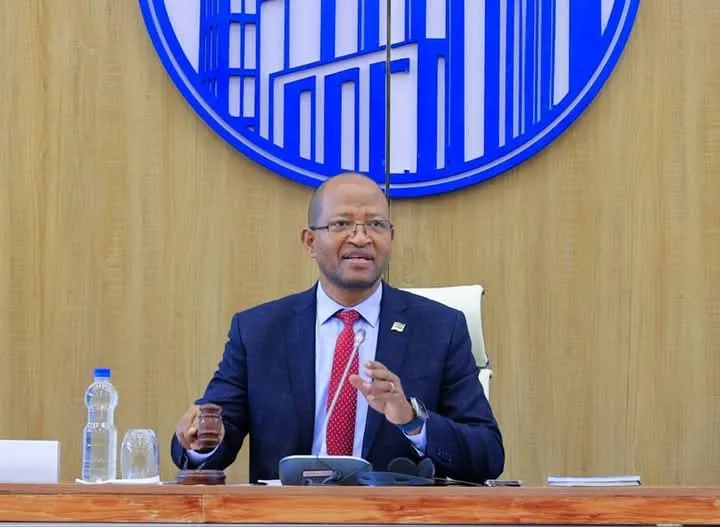
Addis Ababa, January 14, 2025 – The House of People’s Representatives has officially passed a new Property Tax Proclamation, introducing a landmark tax policy that imposes levies on urban land, buildings, and land improvements. The law is expected to bolster municipal revenue and finance infrastructure development, but it has also sparked heated debate regarding its potential impact on taxpayers and economic inequality.
The law, initially introduced in June 2024, was part of a broader government effort to expand the tax base, including proposed amendments to value-added tax (VAT) and excise tax laws. After undergoing scrutiny by the Standing Committee on Planning, Budget, and Finance Affairs, and following public consultations held in December 2024, the final version of the bill was passed with ten votes in favor and four against during Parliament’s 15th regular session.
Under the newly approved Property Tax Proclamation, the taxable amount for any property is set at 25% of either its market value or its replacement value. The tax rate for land usage rights ranges from 0.2% to 1% of the annual taxable amount, while the tax on buildings and land improvements is set between 0.1% and 1% of their taxable value.
Municipalities are now authorized to collect revenue directly through property taxes, granting them increased financial autonomy to fund essential services and urban development projects.
During the parliamentary session, Desalegn Wodaje, Chairperson of the Standing Committee on Planning, Budget, and Finance Affairs, justified the need for the tax, stating:
“There is a significant gap between the needs of growing urban populations and the resources available to address those needs. The increasing value of urban property is not being adequately taxed, resulting in a shortfall in government revenue. This situation contributes to economic inequality within cities.”
While government officials defended the law as a necessary step toward economic modernization, it faced sharp criticism from several lawmakers, who raised concerns about the burden it could place on low- and middle-income earners.
MP Bartuma Fikadu criticized the policy, stating:
“The law stipulates that 25% of the market value of the land will be subject to tax. It also states that the tax amount will increase annually. This law favors the tax collector instead of considering the burden on taxpayers.”
Similarly, Desalegn Chane (PhD), a representative from the National Movement of Amhara (NaMA), questioned whether the additional tax was necessary, given the government’s strong tax collection performance in the past fiscal year.
“The government reported collecting 490 billion birr in taxes over the past six months. This indicates that it has the potential to collect over a trillion birr by the end of the fiscal year. This amount is sufficient to cover government expenditures without imposing additional taxes on citizens.”
The proposal also raised questions about tax fairness. Ewnetu Alene, Chairperson of the Standing Committee on Democratic Affairs, voiced concerns that the law might disproportionately impact low-income earners and government employees rather than targeting large-scale property owners.
“In our country, the majority of taxes are imposed on low-income individuals, particularly urban residents and government employees. Are we improving the tax system by overburdening these segments of society? Shouldn’t we instead impose higher taxes on those owning extensive land and properties to better support low-income citizens?”
Ewnetu also pointed out that while some proclamations appear favorable when debated in Parliament, they often become a heavy burden when implemented in practice.
Despite the concerns, government officials argue that the property tax is essential for sustainable urban development.
Eyob Tekalign (PhD), State Minister for Finance, emphasized that the law is part of Ethiopia’s broader economic modernization strategy and would ultimately strengthen the financial capacities of cities.Forex auction alerts
“By enabling cities to have stronger financial capacities, it will facilitate the creation of a better tax base to improve the quality of life in every city.”
Furthermore, Ato Desalegn Wodaje reiterated that urban residents already contribute indirectly to infrastructure development through various fees and levies. However, he stressed that municipalities must have dedicated revenue streams to keep up with urbanization and increasing infrastructure demands.
“Municipal growth and urban expansion have significantly increased the need for infrastructure investment. Relying solely on government funds to cover all development expenses is not sustainable. Cities must contribute through local taxation.”
Under the new law, certain federal and regional government institutions, as well as nonprofit organizations, are exempt from the property tax. However, lawmakers questioned why religious institutions were not included in the list of exemptions.
Comments
No comments yet. Be the first to leave a comment!
Leave a Comment

Society
Old Jaffa, New Tel Aviv
November 22, 2025

Society
“Now, It’s My Land”: Legal Reform Transforms Women’s Ownership in Rural Ethiopia
November 15, 2025

Society
A Gift of Technology — and Hope — for Koye’s Students
November 08, 2025
Society
Data for a Changing Climate: From Soil to Strategy
November 01, 2025

Society
Harnessing Data, Driving Innovation: Securing East Africa’s Water Future
October 25, 2025

Society
Bridging the Health Gap: Ethiopia’s push for Equitable Health
October 18, 2025
Art
Blending traditions: A taste of Italy, Crafted with Ethiopian ingredients
December 06, 2025
Art
Between Tradition and Trend: Ethiopia’s Musical Identity in the Modern Era
November 29, 2025
Art
Ethiopia’s Living Heritage in the Holy Land
November 22, 2025
Art
The Door that Never Closed: Honoring Getnet Enyew
November 15, 2025
Art
Echoes of Memory
November 01, 2025

ethiopian-news
April 23, 2025
Drone Strike Kills Over 100 Civilians in East Gojjam: Enarj Enawga Community Devastated by Tragedy
ethiopian-news
February 15, 2025
Djibouti’s Mahmoud Ali Youssouf Elected as New African Union Commission Chairperson

ethiopian-news
January 21, 2025
From Birthrights to Aid Freezes: Ethiopia Caught in Trump’s Policy Crossfire
ethiopian-news
January 14, 2025
Ethiopia Approves Landmark Property Tax Law Amid Debate on Economic Impact

ethiopian-news
January 04, 2025
Addressing the Root Cause: Why Ethiopia Must Abandon Ethnic Federalism for National Unity

ethiopian-news
December 26, 2024
The Ethiopian Human Rights Council, a 33-Year-Old Human Rights Organization, Suspended

ethiopian-news
December 17, 2024
Ethiopian Cargo Expands Fleet with Two Boeing 767 Freighters to Meet Growing Demand

ethiopian-news
November 25, 2024
Meskerem Aberra Sentenced to One Year and Four Months in Prison for “Computer Crime”