ethiopian-news
January 04, 2025
Addressing the Root Cause: Why Ethiopia Must Abandon Ethnic Federalism for National Unity




By
Addis Insight
This is a follow-up of my rejoinder: Critique of Messay Kebede’s “Elites’ Power Grab Contra People’s Empowerment”
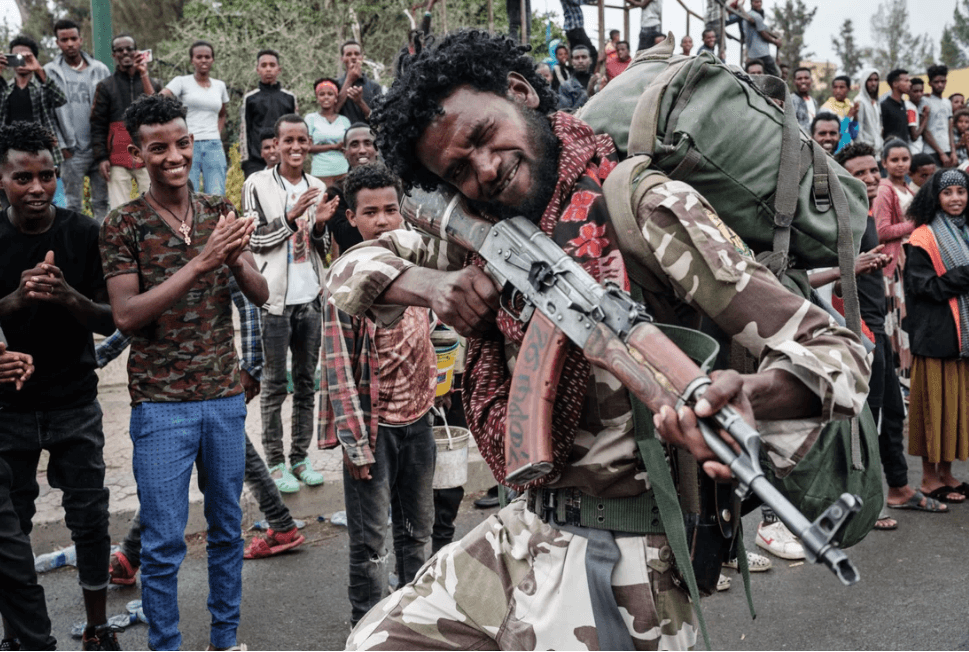
Based on lived experience and root cause analysis, Ethiopia’s ethnic federalism, instituted under the 1995 constitution, has exacerbated divisions, triggered conflicts, and undermined the practice of democracy and the protection of individual rights. By promoting a false narrative that casts the Amhara as oppressors who unfairly benefited at the expense of others, this system has fractured the nation along ethnic lines, granted ethnic groups a constitutional right to secession, and perpetuated exclusion, economic stagnation, and persistent violence. Retaining ethnic federalism and its ethnic-based boundaries will not prevent Ethiopia’s disintegration, nor can this system of ethnic apartheid be transformed into a democratic framework. With each passing day, Ethiopia moves closer to collapse as ethnic animosity grows, violence continues, and national unity erodes. To secure Ethiopia’s survival and lay the groundwork for democracy, the deep root causes of these challenges—ethnic federalism and its constitutional foundation—must be abolished. This is why:
1. Ethnic Federalism is Inherently Exclusionary and Fuels Conflict
Ethnic federalism is inherently divisive and exclusionary. Although the Constitution nominally stipulates the protection of individual rights, in practice, it prioritizes group rights, fostering exclusion rather than inclusion. Ethnic boundaries create divides based on the vague, imaginary, and contentious categorization of “nations, nationalities, and peoples”—terms with no clear or distinctive meanings. These boundaries deepen mistrust and animosity. Given Ethiopia’s long history of population movement and integration, ethnic boundaries cannot be mutually exclusive and are inevitably contentious. Areas such as Woqait, Raya, Dera, Addis Ababa, Moyale, and Dire Dawa exemplify how ethnic-based boundaries fuel disputes and violence.
Since 1991, Ethiopia has experienced escalating ethnic conflicts, including mass displacement, ethnic cleansing, and genocide. Atrocities in Oromia, Benishangul, Somali, Tigray, and Amhara regions illustrate how ethnic loyalties are prioritized over citizenship, undermining national unity and fostering instability. The constitution’s provision for secession compounds these problems by allowing regions to threaten or pursue separation at will, further destabilizing the nation.
The claim that Oromos, Ethiopia’s largest ethnic group, benefits from ethnic federalism is deeply flawed. It relies on unreliable census data and the false assumption that most Oromos support or benefit from the system. In reality, ordinary Oromos, like other ethnic groups, endure widespread unrest, fear, and poverty under ethnic federalism. Forex auction alerts
Some argue that abandoning ethnic federalism could lead to further instability. For instance, Professor Messay Kebede has cautioned against reverting to Ethiopia’s imperial system. However, this concern misrepresents the issue. Advocates for reform are not calling for a return to a unitary state but rather for a federal system that avoids dividing the country along ethnic lines.Forex auction alerts
Most nations worldwide operate under unitary systems that respect individual rights, foster national unity, and uphold democracy. A unitary system is not inherently problematic; in fact, it is a widely adopted form of governance. Countries often choose a unitary system when its advantages outweigh the challenges of a federal or decentralized system.
In Ethiopia’s case, however, a more effective federal system could address inequities and development needs through democratic processes, equitable resource distribution, and the promotion of ethnic languages and cultures—without institutionalizing division and mistrust.
2. Failure to Benefit Ordinary Citizens
While ethnic elites exploit ethnic federalism for personal gain, ordinary citizens—whether Oromo, Somali, Tigrayan, Amhara, etc—have seen no tangible benefits. For instance, TPLF leaders and generals embezzled billions, yet ordinary Tigrayans suffered immensely during the war, with nearly a million lives lost and millions displaced. A poor mother who lost her children to the Tigray war grieves deeply for the rest of her life, while the children of TPLF generals enjoy a luxurious lifestyle in the United States. Similarly, the ongoing struggles of ordinary Oromos and Amharas illustrate the failure of ethnic federalism to provide peace, security, or economic opportunity. The system is designed to perpetuate violence, poverty, and fear, while enriching corrupt elites. Infighting among ethnic elites, such as within the TPLF and Oromo political factions, reveals that their primary concern is not the welfare of their constituents but the preservation of their power.
3. Ethnic Federalism Threatens Ethiopia’s SurvivalForex auction alerts
Ethnic federalism has brought Ethiopia closer to disintegration. Ethnic animosities have intensified, and national unity continues to erode. Contrary to claims that the system prevents disintegration, history since 1991 has demonstrated that ethnic federalism accelerates the nation’s fragmentation. Its undemocratic nature ensures that conflicts cannot be resolved peacefully, resulting in perpetual civil wars and the erosion of Ethiopia’s sovereignty.
No matter which ethnic group holds power—whether Meles from Tigray, Hailemariam from Wolayta, or Abiy from Oromia—the outcomes remain the same: ethnic cleansing, genocide, corruption, and economic stagnation. The problem is systemic, not merely one of leadership or implementation.
4. Institutionalized Discrimination and Corruption
Ethnic federalism institutionalizes discrimination and corruption. Public institutions, including the judiciary, parliament, defense, law enforcement, and educational systems, etc. serve ethnic elites rather than the Ethiopian people. This undermines meritocracy and creates systemic discrimination against minorities within regional states, leading to evictions, ethnic cleansing, and war. There is no accountability. In practice, the prioritization of group rights over individual rights leaves minorities unprotected, eroding public trust and making democracy unattainable.
5. Suppression of Civic and Political Freedoms
Ethnic federalism stifles reasoned discourse, free expression, and civic engagement. Human rights organizations, activists, and political parties face severe restrictions under a system that prioritizes ethnic allegiances over democratic principles. Government institutions and media play a significant role in indoctrinating youth to accept ethnic divisions, suppressing critical thinking, and discouraging meaningful democratic participation.
This system has institutionalized ethnic division within the education sector and society at large. Youth are systematically taught to identify primarily with their ethnicity rather than as citizens of a unified Ethiopia. As Lencho Letta, one of the founders of the OLF, publicly admitted, the OLF leadership had to fabricate an enemy to advance ethnic agendas. Similarly, his colleague Lencho Bati, an Ambassador under Abiy’s regime, acknowledged that they had to deconstruct Ethiopia in order to construct Oromia. Moreover, ethnic elites—including professors teaching at Western universities—often fabricate falsehoods, distort census data, manipulate historical facts, and incite conflicts.
Asafa Jalata and Dr. Abbas Haji Ganamo claimed that “between 1868 and 1900, half of all Oromo were killed, around 5 million people.” A rational person would first question whether there were 10 million Oromos during that period. This claim is a blatant falsehood that undermines the credibility of both individuals and tarnishes the reputation of the academic institutions with which they are associated.
Comments
No comments yet. Be the first to leave a comment!
Leave a Comment

Society
Old Jaffa, New Tel Aviv
November 22, 2025
Society
“Now, It’s My Land”: Legal Reform Transforms Women’s Ownership in Rural Ethiopia
November 15, 2025

Society
A Gift of Technology — and Hope — for Koye’s Students
November 08, 2025
Society
Data for a Changing Climate: From Soil to Strategy
November 01, 2025

Society
Harnessing Data, Driving Innovation: Securing East Africa’s Water Future
October 25, 2025
Society
Bridging the Health Gap: Ethiopia’s push for Equitable Health
October 18, 2025
Art
Blending traditions: A taste of Italy, Crafted with Ethiopian ingredients
December 06, 2025
Art
Between Tradition and Trend: Ethiopia’s Musical Identity in the Modern Era
November 29, 2025
Art
Ethiopia’s Living Heritage in the Holy Land
November 22, 2025
Art
The Door that Never Closed: Honoring Getnet Enyew
November 15, 2025
Art
Echoes of Memory
November 01, 2025

ethiopian-news
April 23, 2025
Drone Strike Kills Over 100 Civilians in East Gojjam: Enarj Enawga Community Devastated by Tragedy
ethiopian-news
February 15, 2025
Djibouti’s Mahmoud Ali Youssouf Elected as New African Union Commission Chairperson
ethiopian-news
January 21, 2025
From Birthrights to Aid Freezes: Ethiopia Caught in Trump’s Policy Crossfire
ethiopian-news
January 14, 2025
Ethiopia Approves Landmark Property Tax Law Amid Debate on Economic Impact
ethiopian-news
January 04, 2025
Addressing the Root Cause: Why Ethiopia Must Abandon Ethnic Federalism for National Unity
ethiopian-news
December 26, 2024
The Ethiopian Human Rights Council, a 33-Year-Old Human Rights Organization, Suspended

ethiopian-news
December 17, 2024
Ethiopian Cargo Expands Fleet with Two Boeing 767 Freighters to Meet Growing Demand

ethiopian-news
November 25, 2024
Meskerem Aberra Sentenced to One Year and Four Months in Prison for “Computer Crime”