politics
December 09, 2025
2.3 Million Failed Before, Half a Million Failed This Year: Ethiopia Can No Longer Deny Its Education Crisis




By
Addis Insight
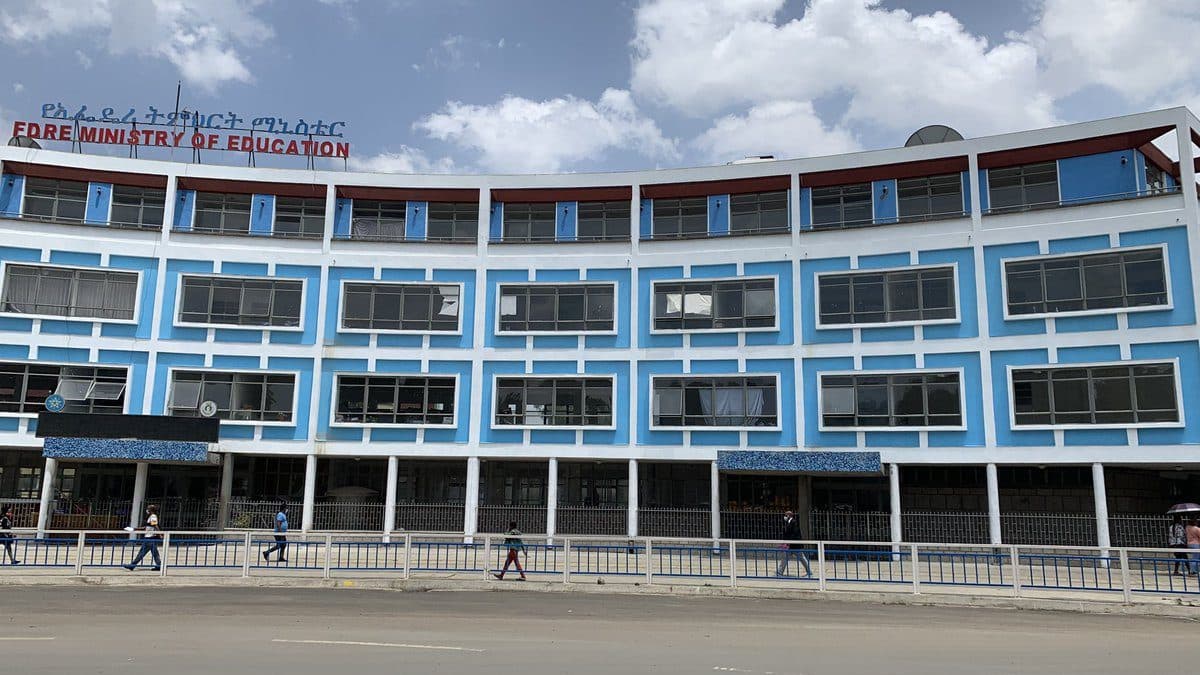
When nearly half a million young Ethiopians are told they have failed their university entrance exam, what exactly do we mean? Who failed whom? This year, only eight percent passed, but this crisis did not begin today. In an interview aired by the Ethiopian Broadcasting Corporation (EBC) approximately five months ago, the interviewer noted that between 2021 and 2024, an estimated 2.3 million students failed the university entrance exam. Now, another half million have been added to that number in 2025. How many more do we need to sacrifice before we accept that something far deeper is wrong? The Ministry presents this year’s result as a sign of progress, yet behind the statistic is a painful truth: Ethiopia is facing an education collapse unlike anything in its modern history.
The disparities reveal the truth. As Addis Insight previously reported, performance varies sharply across school types. This year, boarding schools scored 71%, private schools 51% percent, and government schools scored only 30.6%. Most Ethiopian families cannot afford anything except government schools. Therefore, we must ask whether we are drifting toward a system where quality education becomes a privilege for the wealthy few.
When the Ministry of Education says cheating has decreased, the suggestion is that students failed simply because they used to cheat. But education is never that linear. Learning outcomes reflect many forces at once: school quality, teacher competence, infrastructure, access to materials, mental health, household poverty, gender burdens, conflict, displacement, and the basic ability to study in safety. To place the blame solely on students is not only simplistic. It is unjust.
What the Research Shows About Our Schools
National and international assessments consistently point to chronic shortages of textbooks, laboratories, libraries, and functional classrooms. Schools are overcrowded, and the infrastructure is weak. Many teachers lack proper subject mastery or pedagogical training. Urban and rural schools show stark inequality in access to materials, tutoring, and stable learning environments. These findings appear repeatedly in the Ministry’s own reviews and in independent studies.
The televised interview on Oromia Broadcasting Network added further evidence. Dr. Tola Bariso, head of the Oromia Education Bureau, stated that only 23% of teachers passed a competence exam in the subject they are teaching. If a teacher cannot meet the basic standard in the subject they teach, how should we expect the student to do so? How can a child excel in chemistry without a functioning lab, an updated textbook, or a qualified instructor?
Dr. Tola also stated that about 89% of schools in Ethiopia fall below the Ministry’s minimum standards. When nine out of ten schools lack the essential conditions for learning, the question is no longer why 92% failed. The real question is how any student passed at all.
One mother interviewed in the same segment said, “I am sending three of my children to school, but I know they will fail. They will come back to me as a burden.” This is not a parent who dismisses education. This is a parent who has lost faith in the system meant to serve her children.
The Inequality No One Wants to Acknowledge
Students from wealthy families often attend private schools with qualified teachers, modern curricula, computers, laboratories, and tutoring. They return home to quiet study spaces, electricity, stable meals, and supportive environments.
Students from economically disadvantaged backgrounds attend underfunded public schools with no materials. They walk long distances, struggle with hunger, and study by candlelight. Many shoulder household responsibilities before and after school. Girls face the added burden of domestic labor, unsafe school environments, early marriage pressures, and a lack of menstrual hygiene support.
So, when a girl from a rural village is told she “failed,” what does that result actually measure? Her intelligence, or the weight of the barriers placed on her?
Affirmative action existed to address these realities, and its sudden removal has aggravated the inequality even more.
The Collective Response
After the announcement that 92% percent had failed, a public outcry emerged. Together with Mr. Seifu Kebede, a PhD candidate in Australia, we launched a petition calling for the Ministry to temporarily lower the pass mark to 40% or even lower as an emergency measure. The intention was not to weaken standards but to prevent irreversible harm while deeper reforms take place.
My short explanatory video unexpectedly reached wide audiences. The response showed that Ethiopians are not silent out of apathy but out of exhaustion. We collected three thousand five hundred signatures from inside the country and abroad and presented our request directly to the Ministry.
I sat across from H.E. Prof. Berhanu Nega and his advisor, Mr. Solomon Shiferaw. They told me that lowering the pass mark would reduce quality. But quality for whom, and at what cost? What kind of quality are we defending when classrooms have no books, schools have no laboratories, and many areas lack peace?
The Remedial Program: A Solution or a Deflection
The Ministry’s preferred alternative is the remedial program. Students must study for an additional year and retake the exam. Yet student after student tells us that the remedial materials do not align with the actual exam. Their concerns are dismissed. Parents already struggling to pay basic school costs cannot fund an extra year. In our interviews, students report that university instructors give poor-quality instruction and treat remedial classes as an extra burden. These programs should not serve as a way to quiet public frustration. They must be redesigned into a genuine pathway that supports rather than delays the futures of young people.
What the Ministry Might Say
Comments
No comments yet. Be the first to leave a comment!
Leave a Comment

Society
Old Jaffa, New Tel Aviv
November 22, 2025

Society
“Now, It’s My Land”: Legal Reform Transforms Women’s Ownership in Rural Ethiopia
November 15, 2025

Society
A Gift of Technology — and Hope — for Koye’s Students
November 08, 2025
Society
Data for a Changing Climate: From Soil to Strategy
November 01, 2025

Society
Harnessing Data, Driving Innovation: Securing East Africa’s Water Future
October 25, 2025

Society
Bridging the Health Gap: Ethiopia’s push for Equitable Health
October 18, 2025
Art
Blending traditions: A taste of Italy, Crafted with Ethiopian ingredients
December 06, 2025
Art
Between Tradition and Trend: Ethiopia’s Musical Identity in the Modern Era
November 29, 2025
Art
Ethiopia’s Living Heritage in the Holy Land
November 22, 2025
Art
The Door that Never Closed: Honoring Getnet Enyew
November 15, 2025
Art
Echoes of Memory
November 01, 2025
politics
December 09, 2025
Conflict-Related Sexual and Reproductive Violence in Ethiopia: Cantering the Needs of Victims

politics
December 09, 2025
2.3 Million Failed Before, Half a Million Failed This Year: Ethiopia Can No Longer Deny Its Education Crisis

politics
December 06, 2025
Oromia Bank Posts 2.6 Billion Birr Pre-Tax Profit, Revenue and Deposits Surge Sharply

politics
December 05, 2025
M-PESA Ethiopia Alleges Ethio Telecom Blocking Its New Lehulum Service on Mobile Data

politics
December 04, 2025
Ethiopia Suspends Licenses of 22 Sports Betting Agencies Amid Massive Embezzlement Probe

politics
December 03, 2025
Why the Birr Keeps Falling: Ethiopia’s Currency Crisis Is a Symptom, Not the Disease
politics
December 02, 2025
NBE Announces Forex Auction Results: 17 Banks Push Dollar Price to 154.3993 Br
politics
December 01, 2025
Ethiopia’s Central Bank Announces $50 Million FX Auction for December 2