Speak Your Mind
November 30, 2025
Reclaiming the Land: Choosing Farming over Exodus




By
Samuel Getachew
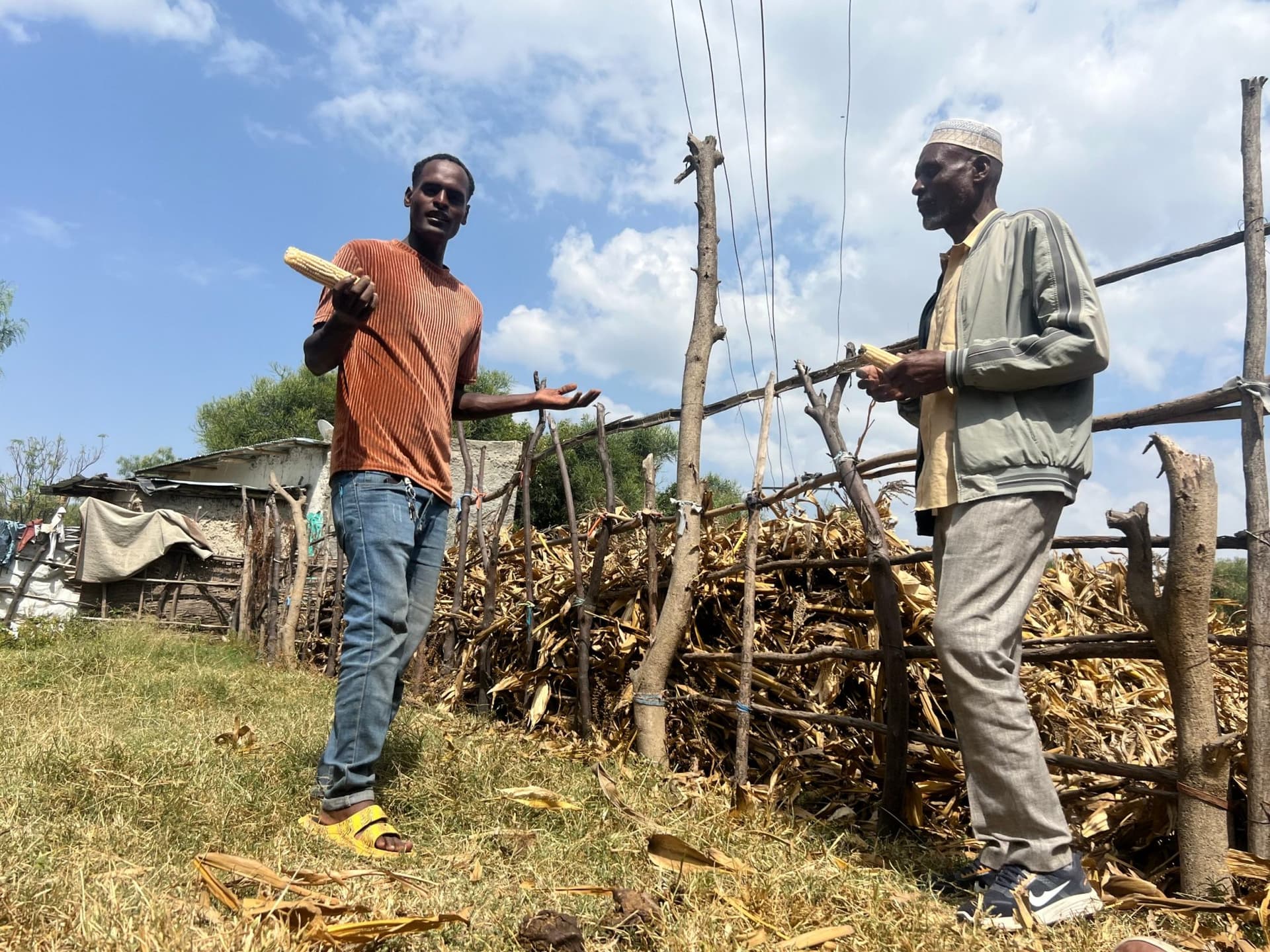
In a quiet village just outside the bustling town of Batu—where Dutch-owned flower farms dominate the landscape—23-year-old Alemu Baba has chosen a path that many of his peers have long abandoned: he has become a farmer.
While most young men from his community embark on perilous journeys toward Yemen and Libya, gambling their lives for a chance to reach Europe or the Gulf, Alemu returned home. After months working as a construction laborer in Bishoftu for a wage he says “barely covered daily expenses,” he faced a future that, in his words, “looked completely empty.”
“I didn’t see a way forward in the city, and people my age thought farming had no future,” he said. “But now I’m earning enough to support my family, and I’m even planning to expand into bee farming.”
Alemu is part of a growing cohort of young people finding new promise in agriculture, aided by the Global Green Growth Institute (GGGI), a Seoul-based organization working to modernize farming in low-income communities. Over the past two years, the Institute has introduced training and technology to roughly 400 farmers in the region, helping them shift from subsistence production to sustainable, market-oriented agriculture. The effort—funded by the Italian government under a project titled Fostering Food Security to Prevent Conflict and Ensure Stability—includes access to vermicompost, climate-smart tools, and support to help farmers become food secure and profitable.
Among the beneficiaries is Alemu’s father, 50-year-old Baba Morki, a lifelong farmer in AbjataKebele of Adami Tulu JidoKombolchaWoreda. He has witnessed not only his own transformation but that of his neighbors.
Baba has been part of the program from the start, receiving training in entrepreneurship, organic market linkages, and the use of solar-powered irrigation systems—three of which now irrigate a combined 130 hectares in an area once defined by chronic water shortages. For the first time, he no longer relies on grid electricity, and year-round farming has become possible.
“In the past, if the weather failed us, we sold livestock just to survive,” he said. “It kept us poor and without hope.”
Today, Baba says, the change is visible everywhere. Herds are growing. Income is more stable. Young people, once determined to flee the village, are beginning to see farming as a viable livelihood rather than a last resort.
“Before, our work was seasonal and labor intensive. Now we farm continuously, earn more, and finally dream bigger for our children,” he said. “They no longer need to leave home to build a future.”
Both Baba and his son have earned enough from their fields to build modern homes—an unlikely outcome just a few years ago.
GGGI, which began operations in Ethiopia in 2010, aims to help the country build a climate-resilient green economy by 2030 and reduce its reliance on emergency food aid. More than 10 million Ethiopians currently require humanitarian assistance, according to the United Nations.
The shift toward sustainable agriculture is also reshaping young people’s aspirations beyond the farms themselves. In Batu, 21-year-old waiter and tourism graduate Brook Teshome recalls planning his own journey abroad. He had saved what little he could from long shifts, fully prepared to attempt the clandestine route through Djibouti.
But watching farmers—including his older brother—reap the benefits of the new practices has changed his thinking.
“I used to believe the only way to succeed was to leave,” he said. “Now I see young people making something of themselves here, if they can get land. I’m even considering becoming a farmer instead of working for someone else.”
A similar transformation is underway in Bulbula, where farmer AmanGemeda has expanded his operations with the help of solar irrigation and vermicompost on land that now sits alongside the new Batu–Hawassa freeway.
Aman says that many people are seeing farming in a different light.“My experience is showing others that farming can be different—that we’re not defined by the shortages and hunger that once shaped our lives,” Aman said.
Comments
No comments yet. Be the first to leave a comment!
Leave a Comment

Society
Old Jaffa, New Tel Aviv
November 22, 2025
Society
“Now, It’s My Land”: Legal Reform Transforms Women’s Ownership in Rural Ethiopia
November 15, 2025

Society
A Gift of Technology — and Hope — for Koye’s Students
November 08, 2025
Society
Data for a Changing Climate: From Soil to Strategy
November 01, 2025
Society
Harnessing Data, Driving Innovation: Securing East Africa’s Water Future
October 25, 2025
Society
Bridging the Health Gap: Ethiopia’s push for Equitable Health
October 18, 2025
Art
Blending traditions: A taste of Italy, Crafted with Ethiopian ingredients
December 06, 2025
Art
Between Tradition and Trend: Ethiopia’s Musical Identity in the Modern Era
November 29, 2025
Art
Ethiopia’s Living Heritage in the Holy Land
November 22, 2025
Art
The Door that Never Closed: Honoring Getnet Enyew
November 15, 2025
Art
Echoes of Memory
November 01, 2025

Speak Your Mind
December 06, 2025
A New Voice Rising
Speak Your Mind
November 30, 2025
Reclaiming the Land: Choosing Farming over Exodus

Speak Your Mind
November 22, 2025
Tigray’s Political Crisis Demands Dialogue, Not Division
Speak Your Mind
November 15, 2025
Africa at the CIIE: Products, partnerships and prosperity
Speak Your Mind
November 08, 2025
Lighting up Ethiopia: How the GERD Can Drive Universal Electrification
Speak Your Mind
November 01, 2025
Compromised Neutrality: EU’s Partisan Stance on the Nile
Speak Your Mind
October 25, 2025
From Trade to Knowledge: What WTO Means for Ethiopia
Speak Your Mind
October 18, 2025
Investing in digital partnerships for Africa’s water