food-drink
September 01, 2025
Who Told America That Ethiopia’s Sambusa Is an Appetizer?




By
Addis Insight
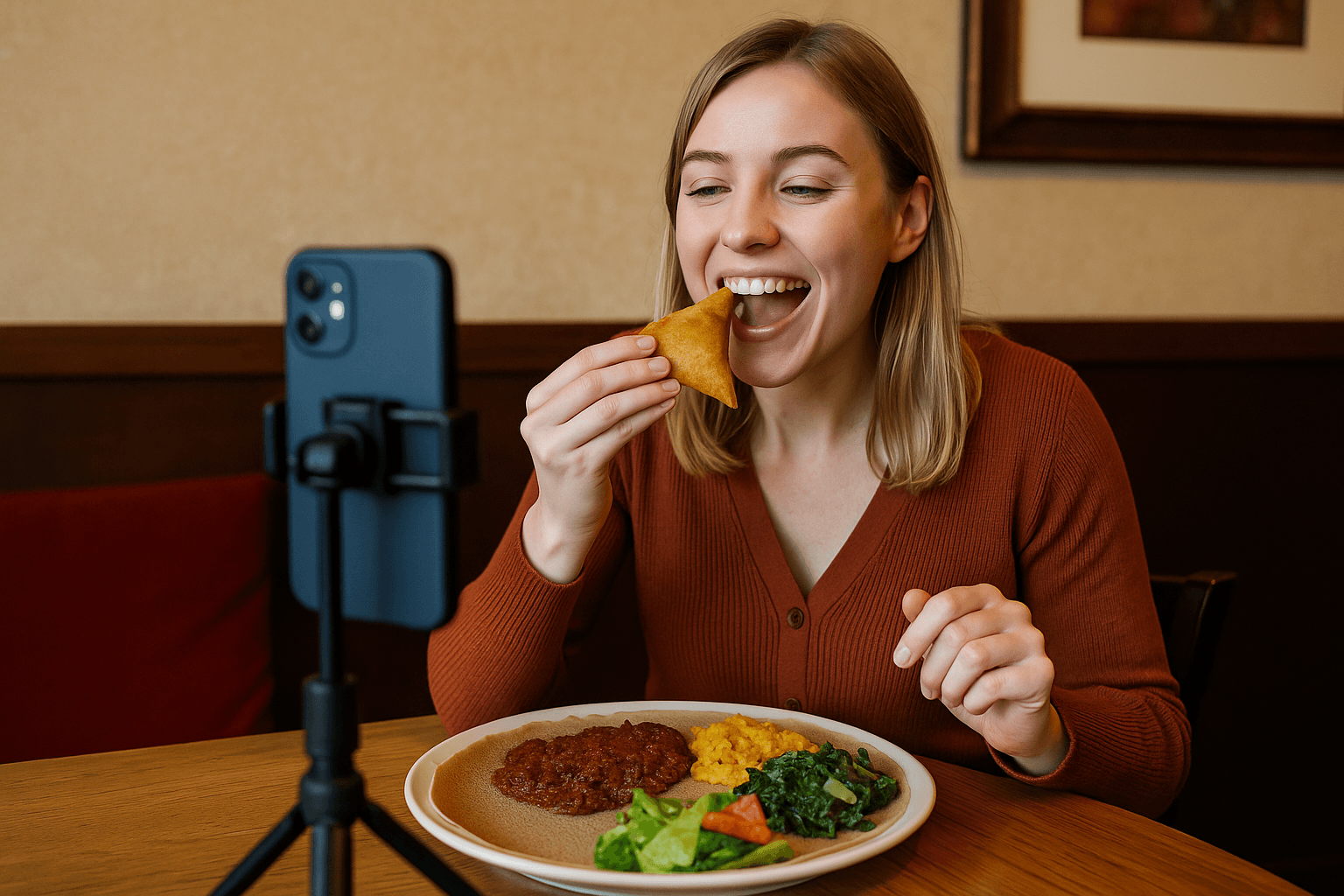
At nearly every Ethiopian restaurant in the United States, the sambusa appears under “Appetizers.” This triangular pastry, filled with spiced lentils or minced meat, has become the near-universal first impression of Ethiopian cuisine in America. But why would a food often eaten casually with tea in Ethiopia take on such a formal role in the U.S.?
The answer is not a single decision but the result of migration, adaptation, and entrepreneurship. The sambusa’s American role reflects its long history of reinvention and the structural demands of the U.S. restaurant system. Its placement on the menu is not a misunderstanding of tradition but a creative act of translation, ensuring Ethiopian cuisine could thrive in a new cultural environment.
The sambusa’s story has always been one of movement and change. Its roots trace to medieval Persia, where it was known as sanbosag. Poets and scholars celebrated it, and cookbooks from the 10th to 13th centuries describe its role in royal courts. From Persia, traders carried it eastward to India, where it became the samosa. In the Delhi Sultanate, it transformed from a baked delicacy to a fried snack filled with spiced potatoes, peas, and lentils.
Trade routes also carried the pastry south into East Africa. There, it became the sambusa, embedded in the foodways of Ethiopia, Somalia, and neighboring regions. The Ethiopian version typically featured lentils or minced beef, spiced with garlic, ginger, and chilies. Each stop along the way brought new fillings, names, and cultural meanings. Change is not a departure from its identity but its defining feature.
This legacy of reinvention set the stage for its latest transformation—its rebirth as an American appetizer.
In Ethiopia and the broader Horn of Africa, sambusas are versatile. They are sold on streets, served with tea, and enjoyed at family gatherings. They also hold special significance during holidays such as Ramadan and Christmas, where they are often used to mark communal celebration.
Yet sambusas are not part of the central Ethiopian dining ritual. Traditional meals revolve around the gebeta—a large shared platter of injera topped with stews (wots). Everyone eats simultaneously, without courses or appetizers. Sambusas sit outside this structure: portable, independent, and flexible. That independence made them the most logical candidate for reimagining within the American coursed meal.
To understand the sambusa’s new role, one must examine the American restaurant script: order drinks, order appetizers, order entrées, consider dessert. The appetizer is not just tradition; it is an economic and cultural fixture.
Appetizers serve multiple functions. They stimulate the appetite, occupy diners while entrées are prepared, and create a social moment of sharing. They are also vital for business—raising the average check size and providing opportunities for chefs to experiment. For restaurateurs, skipping the appetizer category would mean breaking expectations and losing revenue.
In this rigid structure, Ethiopian restaurateurs needed a dish that could fit the “starter” slot without altering its essence. The sambusa was the natural choice.
The first Ethiopian restaurants in the U.S. appeared in the 1960s, but growth accelerated after the 1974 revolution triggered large-scale migration. Communities in Washington, D.C., Los Angeles, New York, and Minneapolis built restaurants as cultural havens for displaced Ethiopians.
At first, menus spoke mainly to Ethiopians, where the communal platter needed no explanation. But as curious Americans began to explore these restaurants, adaptation became necessary. Structuring menus with categories such as “Appetizers” and “Entrees” made Ethiopian food approachable and less intimidating.
This strategy worked. Today, more than 600 Ethiopian restaurants operate in the U.S. The sambusa’s appearance as an appetizer has become a symbol of that transition—from community anchor to mainstream dining option.
Examples across the country illustrate the sambusa’s consistent rebranding:
Despite differences in price and presentation, the pattern is uniform: sambusas are marketed as the gateway into the meal.
The sambusa’s role as an appetizer rests on three converging forces.
Traditional Ethiopian stews are messy, communal, and designed for injera—not small plates. The sambusa, by contrast, is tidy, hand-held, and portioned for individuals. It could be lifted directly into the appetizer category without modification.
For diners unfamiliar with Ethiopian food, sambusas are a friendly entry point. The filled pastry format is globally recognizable—echoing samosas, empanadas, pierogi, and dumplings. Starting with something familiar builds trust and curiosity for the main meal.
For restaurateurs, sambusas are practical and profitable. They can be prepared in batches, fried quickly, and sold at an accessible price. As add-ons, they boost the average bill while meeting diner expectations for appetizers.
The sambusa’s American reinvention is not a loss of authenticity but an act of translation. Its history is one of adaptation, and its U.S. role continues that legacy. Ethiopian restaurateurs recognized its structural fit, cultural familiarity, and business potential, turning it into a successful appetizer.
Today, the sambusa is more than a pastry. It is a cultural ambassador—welcoming Americans into the flavors of Ethiopia and proving that traditions endure not by resisting change but by embracing it. Its journey shows that food culture thrives through reinvention, finding new homes even in a menu section called “Appetizers.”
Comments
No comments yet. Be the first to leave a comment!
Leave a Comment

Society
Old Jaffa, New Tel Aviv
November 22, 2025

Society
“Now, It’s My Land”: Legal Reform Transforms Women’s Ownership in Rural Ethiopia
November 15, 2025

Society
A Gift of Technology — and Hope — for Koye’s Students
November 08, 2025

Society
Data for a Changing Climate: From Soil to Strategy
November 01, 2025

Society
Harnessing Data, Driving Innovation: Securing East Africa’s Water Future
October 25, 2025

Society
Bridging the Health Gap: Ethiopia’s push for Equitable Health
October 18, 2025
Art
Blending traditions: A taste of Italy, Crafted with Ethiopian ingredients
December 06, 2025
Art
Between Tradition and Trend: Ethiopia’s Musical Identity in the Modern Era
November 29, 2025
Art
Ethiopia’s Living Heritage in the Holy Land
November 22, 2025
Art
The Door that Never Closed: Honoring Getnet Enyew
November 15, 2025
Art
Echoes of Memory
November 01, 2025

food-drink
October 25, 2025
Arabica Coffee Hits Record High, Signaling Global Market Shifts

food-drink
September 01, 2025
Who Told America That Ethiopia’s Sambusa Is an Appetizer?

food-drink
August 23, 2025
Gordon Ramsay Saves a Beloved Eritrean Spot in Philly

food-drink
August 13, 2025
From $500 to Nine Restaurants: Ethiopian-Born Sara Aradi’s Rise in Dubai’s Culinary World

food-drink
July 09, 2025
Ethiopia Sets Historic Record, Earning Over $2.6 Billion from Coffee Exports