Business

By Kidus Dawit
November 08, 2025
Safaricom Ethiopia Banks on Breaking Even in 2027, Reports Narrowing Losses
The executives of Safaricom say they are looking to break even on their Ethiopian venture some time in 2027, reporting that Safaricom Telecommunications Ethiopia PLC saw its losses narrow by more than half in the six months leading up to September. Presenting a half-year performance report in Nairobi earlier this week, Safaricom CEO Peter Ndegwa revealed the group’s Ethiopia unit registered close to 16 billion Birr in losses between March and September. The figure is 53 percent lower than the losses Safaricom Ethiopia suffered during the same period last year. The firm has yet to turn a profit since it acquired Ethiopia’s first-ever private telecom operator’s license in May 2021 for an USD 850 million fee. However, Ndegwa says its parent company in Nairobi is optimistic about future prospects. “Ethiopia is full of promise,” said the CEO. “We are engaging the government and key stakeholders to navigate market repair caused by the impact of currency reforms.” Ndegwa says there is a need to review connection prices, particularly for mobile data, in light of the currency devaluation. The federal government’s decision to float the currency in July 2024 only further complicated Safaricom Ethiopia’s operations, which were already under pressure from conflict-related restrictions, security issues, and stiff competition. An October 2025 report from the World Bank and Digital Development Partnership (DDP) criticized what it described as an uneven playing field between Safaricom Ethiopia and state-owned giant Ethio telecom. The report raised concern about “possible preferential arrangements for state-owned enterprises in handling government mobile money transactions” and alleges that Ethio telecom has blocked access to Safaricom apps like its flagship mobile money platform mPesa. Safaricom Ethiopia lost USD 325 million in 2024, according to the report. “Safaricom’s FY24 revenue (USD53.6 million) does not even cover the annual costs of its licenses (USD 1 billion over 15 years, including mobile money, or USD 66.7 million per year). Thus, this raises concerns about long-term investment sustainability and return on capital,” it reads. The World Bank, which extended a USD 150 million loan to the consortium behind Safaricom Ethiopia through the International Finance Corporation (IFC), wants to see the Ethiopian Communications Authority take measures to correct what it sees as unfair competition. “These concerns warrant further investigation by national authorities,” reads its October report. The report also highlights challenges facing Safaricom in terms of infrastructure, which it relies on Ethio telecom and state-owned Ethiopian Electric Power (EEP) to provide. It reveals Safaricom pays out USD three million to Ethio telecom each year for infrastructure rental. Still, the presentation this week indicates that Safaricom is making steady progress in Ethiopia. The operator has managed to register 11.1 million subscribers since it rolled out its network in late 2022.
By Dawit Taye
May 17, 2025
Foreign Banks to Make it to Ethiopia’s Financial Market by 2025: NBE Governor
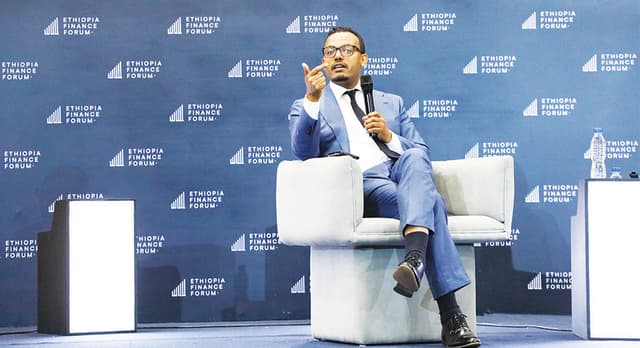
National Bank of Ethiopia Governor Mamo Mihretu says foreign banks will commence operations in the Ethiopian financial sector before the year is out. Speaking at the Ethiopian Finance Forum held mid week, the governor highlighted the government’s decision to open up the financial sector to foreign banks as one of its key recent policy shifts. Mamo then announced that the necessary groundwork has already been laid for the expected entrance into the Ethiopian financial sector of the foreign banks. Stopping short of naming the banks on their ways to Ethiopian financial turf, Mamo emphasized that integrating foreign financial institutions remains one of the NBE’s top priorities. Discussions at the forum also touched on the potential impact of foreign banks on the local market and the broader economy, including anticipated benefits in terms of competition, efficiency, and access to finance. During his presentation Mamo has disclosed that certain guidelines previously considered “obstacles” to the entry of foreign banks will be revised sooner than the timeline initially indicated for their entry. Among the policies cited as restrictive are the mandatory bond purchases required of banks and the 18 percent credit cap. The NBE Governor indicated that these policies will be repealed and that a clear deadline has been set for their removal. Delivering an opening speech at the event, Ethiopia’s President Taye Atske Selassie, has remarked that although Ethiopia’s financial sector is over a century old, it has not matured into a strong and resilient system due to numerous challenges. One key reason, he noted, was the prolonged dominance of government-led economic policies. He added that in the past, the government relied heavily on large loans to finance investments, which burdened the country with debt and weakened the financial system. He noted that Ethiopia’s macroeconomic reform has already produced promising results within a short period. According to him, the reform, is built on three main pillars and has been implemented through clear planning, effective coordination, and well-defined goals. Mamo on his part emphasized that Ethiopia was undergoing major reforms in its monetary, exchange rate, and financial sector policies. ”The overarching aim is to create a more competitive, market-based financial system,” he stressed. Mamo also stated that the reform agenda places strong emphasis on the private sector and is guided by digital transformation and efforts to expand access to financial services.

By Staff Reporter
January 24, 2022
Inflation hits 35.1 percent, the highest in over a decade
Headline inflation reached 35.1 percent last month, said the Ethiopian Statistics Service in its report delayed by over two weeks from the usual timeline. Last month’s inflation is the highest in over a decade, a development the Service attributed to the holiday season, which is characterized by spike in prices of food items. Cost of living has been surging in the last two years, due to supply side problems and fast depreciation of Birr against major baskets of foreign currencies, among others. The soar in prices of food is the major factor for the inflationary pressure. Last month, food inflation stood at 41.6 percent, the highest in three months. The cost of non-food items also exhibited an upsurge last month. It has reached 26.6 percent, the highest in over 10 years.

By Elias Tegegn
December 26, 2020
Industry inputs enterprise concludes HQ design work
The Ethiopia Industrial Inputs Development Enterprise (EIIDE), which was re-established after dissolving the former Merchandise Wholesale & Import Trade Enterprise (MEWIT), concluded the design work for the construction of headquarters within its premises located near the African Union Headquarters. Planned to rest on 3,103 square meters of land, the building will occupy 1,740 square meters. The 18-story mixed purpose building is expected to host office spaces for Banking & Insurance services, cafes, meeting halls and a guest house among others. It will also have a four-story basement for parking, gymnasium, a power house, water reservoir, and other facilities. According to the newly enacted construction guideline by the Addis Ababa City Administration’s Construction Bureau, the enterprise will make 40 percent of the HQ floors for guest houses and residential spaces, disclosed Gutema Kesu, the project engineer at Ethiopia Industrial Inputs Development Enterprise (EIIDE). The Ethiopian Construction Design and Supervision Works Corporation designed the head office building for 3.5 million birr and expects to manage the consultancy work while the bid for the project contractor will be disclosed come January. The design work was given to the state corporation without bidding via board decision as the Enterprise was threatened with evacuation from the land if it did not start construction within three months. “The headquarters will enable the Enterprise enhance its capacity to generate income. Moreover, the location is a key destination to expand EIIDE’s services and earn extra incomes,” stated Gutema. It will also save the Enterprise 13 million birr annually in rental costs. The design approval is done and the bid to hire a Grade-one national or international contractor will be floated by the end of January. The plan is to finish the foundation work before the rainy season comes, the project engineer told The Reporter. Gutema also revealed that the Enterprise will use its fixed assets as collateral to get loan from banks to match the already allocated budget for the construction. Construction of the headquarters is expected to be completed in less than three years. The Ethiopia Industrial Inputs Development Enterprise operates 85 branches across the country and is tasked with distributing raw materials for textiles, rubber, reinforcement bars, foam mattresses, detergents, sugar, nails, cash registers, salt, and edible oil to small and medium enterprises, as well as big industries.

By Kaleyesus Bekele
November 16, 2019
Cheers all around
Ethiopian Airlines recognized members of Sheba Miles, its frequent-flyer program, as it marks the 20th anniversary of the program. Ethiopian celebrated the 20th anniversary of its loyalty program, Sheba Miles, and Customers’ Day on Tuesday November 12, 2019 at Ethiopian Skylight Hotel. The grand anniversary event brought together high-ranking government officials including minsters, ambassadors and the diplomatic community, Sheba Miles members management and board members of the airline and aviation stakeholders. On the occasion, Ethiopian Airlines awarded its Sheba Miles platinum members and cargo customers for their continuous support and patronage to the airline. Tewodros Ashenafi, founder and CEO of South West Holdings, Zemedeneh Nigatu, chairman of Fairfax Africa Fund, and Tibebe Yemanebirhan (MD), a renowned dermatologist, are among the Sheba Miles platinum members who received a plaque from Ethiopian Airlines Group CEO Tewolde Gebremariam. Nine cargo customers also won the award for using Ethiopian Cargo frequently. Sher Ethiopia, Alfarag PLC, Ethio Vegfru PLC and Organic Export Abattoir were among the import export companies that were recognized for their patronage. “We are excited to offer our members with more ways to earn miles over the years,” Tewolde said. “Throughout these years, our customers have immensely contributed to the development of the loyalty program. Our frequent-flyer program has teamed up with several airlines and non-airline partners to create a world of choices for members to accumulate miles.” Tewolde said Ethiopian will continuously strive to offer enormous privileges for its customers underpinned by digital solutions. “We sincerely thank our loyal members and partners for their continued support throughout the years and for inspiring us to constantly enrich their travel and overall travel experiences.” Tewodros Ashehafi a prominent investor who was recognised amongst top platinum members told The Reporter that his father Ashenafi Tessema was one of the first Ethiopian marketing professionals in the early days of the airline. “I am proud to support Ethiopian Airlines from the early days of my father Ashenafi Tessema involvement in building up the airline and later as one of Ethiopian top customers. I am privileged to continue in his tradition,” Tewodros said. “I am honoured to receive the award. Ethiopian is going from strength to strength,” he said. Zemedeneh Nigatu, a renowned consultant turned investor, said that the success of Sheba Miles frequent-flyer program that started with 300 members 20 years ago and now has 3.2 million members, reaffirms the world class quality of the airline and strong loyalty of its customers. “As a platinum Sheba Miles member, I fly very frequently to ET’s 123 worldwide destinations and can attest to the excellent end to end service the airline provides,” Zemedeneh said. Originally named after the Queen of Sheba of Ethiopia, who gave generous reward to King Solomon, according to the Ethiopian mythology, Sheba Miles was launched in February 1999 and the loyalty program has now more than three million members.